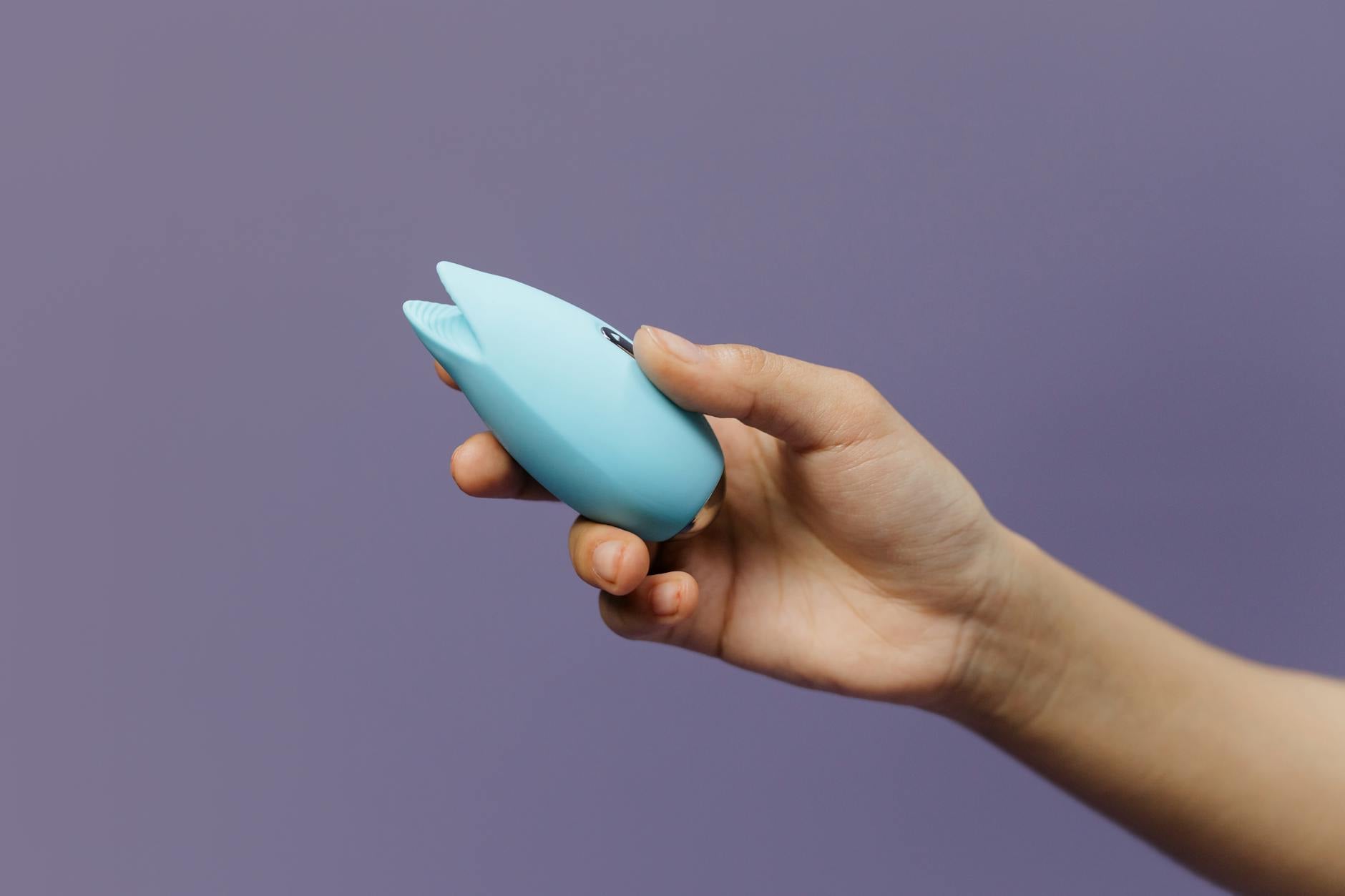
Why Lemon Vibrators Feel Better When Tissues Are Sensitive
Here's the thing about sensitive tissues: most vibrators were not designed with you in mind.
The assumption baked into traditional vibrator engineering is that faster vibration equals better pleasure. That works fine for some bodies. But if your vulva feels tender, reactive, or easily overwhelmed by direct contact, that assumption becomes a problem. You end up either white-knuckling through discomfort or giving up on toys altogether. Neither option is acceptable.
Lemon vibrators, which use suction-based stimulation instead of vibration, change the equation entirely. They distribute pressure differently, activate different nerve pathways, and feel fundamentally gentler on delicate tissue. If you've avoided vibrators because they felt too intense or uncomfortable, this is worth understanding.
How traditional vibrators affect sensitive tissues
When you use a standard vibrator on sensitive vulvar tissue, several things happen physiologically.
First, the vibration concentrates force at the point of contact. If the toy head is small and the vibration frequency is high (which most traditional vibrators are), that force is intense and localized. For some people, that's perfect. For others with sensitive tissue, it creates a sensation closer to buzzing pain than pleasure. The tissue itself is thinner, more reactive, and less forgiving of concentrated pressure.
Second, traditional vibrators require you to maintain consistent pressure and positioning. That means your hand, forearm, and pelvic floor are working harder than they should be. Tension builds. Your nervous system reads that muscular tension as stress, which makes tissue feel even more reactive. It becomes a feedback loop: you tighten up, the stimulation feels more intense, so you pull away, so you can't relax enough to feel pleasure.
Third, vibration-based stimulation activates primarily the superficial nerve endings. Those are the ones most likely to perceive vibration as irritation rather than pleasure when tissue is already sensitive or inflamed.
Photo by cottonbro studio on Pexels
Why suction works differently
Lemon adult toys use suction instead. That's a completely different mechanism.
Instead of vibrating at a point, suction creates a gentle pulsing sensation that activates deeper nerve pathways in the clitoris. The clitoris is not just the visible external bud. It's a complex structure that extends inward, with nerve endings at varying depths. Suction engages those deeper nerves without the same localized, vibration-based intensity.
There's also the comfort factor. Suction doesn't require the same hand strength or precise positioning. You can relax into it. That matters more than it sounds. When your nervous system isn't braced for impact, it has the bandwidth to actually register pleasure. Relaxation is not a side effect of pleasure. It's a prerequisite.
The pressure distribution is also gentler. Instead of concentrating force at one point, suction spreads pressure across a larger surface area. That's especially important if your tissue is already inflamed, if you're dealing with genitourinary syndrome of menopause, or if you just have a nervous system that perceives vibration as overstimulation.
The science of sensitivity
Let's be specific about what "sensitive" actually means physiologically.
Sensitive vulvar tissue can show up in several ways. It might be thinner than average (which is completely normal and has nothing to do with your age or your previous activity). It might be more prone to micro-tears or inflammation. It might have a lower pain threshold due to nerve density or hormonal factors. All of these are variations of normal. None of them mean you can't have amazing pleasure.
What they do mean is that your tissue responds better to gentler stimulation applied in ways that don't create friction or focused pressure. That's exactly what lemon vibrators do.
Research on clitoral stimulation shows that sensation sensitivity is highly individual. Some people perceive vibration primarily through pressure-sensitive nerves. Others perceive it through texture and movement. Many experience suction as almost a gentle pulling sensation rather than a buzzing one. When you switch from vibration to suction, you're changing which nerve population you're activating. For sensitive tissues, that shift can be the difference between discomfort and genuine pleasure.
Comparison to other approaches
If you've tried to work around sensitivity before, you've probably tried one of a few things.
Some people use vibrators over clothes or through layers. That muffles the intensity, but it also muffles the sensation. The result is numb rather than gentle.
Others use the lowest vibration setting on a standard vibrator. Better, but it usually still misses the mark because the mechanism is fundamentally vibration-based. You're just turning down a sensation you don't actually want, rather than switching to a sensation you do.
Some people use wand vibrators instead of bullet vibrators. Wands have a larger head, which does spread pressure more. That helps. But it's still vibration, and for many sensitive tissues, suction simply works better. Why lemon vibrators work better for sensitive vulvas goes deeper into that comparison.
A few brave souls try to just use their hands or a partner's touch. That's valid and wonderful. But it's also a lot of work and doesn't give you the sustained, hands-free stimulation that a toy provides. You deserve an option that's both effective and easy.
What sensitivity actually means for pleasure
Here's what I want you to know: sensitivity does not mean you're broken. It means you have information about what works for you.
Many of my clients who describe themselves as having sensitive tissues report that once they find a toy that matches their body, their pleasure is actually more intense and more consistent than it was before. That's because they're not fighting against discomfort anymore. The nervous system isn't guarding. Arousal builds naturally instead of requiring you to override sensation to reach it.
That shift is significant. You're not learning to tolerate pleasure. You're learning to receive it.
Practical things to know
If you're considering a lemon clitoral vibrator for the first time and you have sensitive tissue, here are the concrete things that help.
Start with the lowest suction setting. The beautiful thing about suction-based toys is that the range feels genuinely different at each level, and the lowest settings are actually pleasurable rather than just "not as intense." You're not sacrificing sensation to reduce intensity.
Use water-based lubricant even if you don't feel like you need it. For sensitive tissue, lube reduces friction and makes everything feel more comfortable. It also makes the suction sensation feel more complete.
Give your body time to warm up. Unlike vibration, which is immediately present, suction builds sensation slowly. That's a feature, not a bug. It gives your nervous system time to transition into arousal without being startled into it.
If you have a partner, communication here is gold. Let them know you're exploring something new and that you might need to go slow or pause and restart. That takes pressure off both of you.
When to seek additional support
If sensitivity comes with pain, see a pelvic floor physical therapist or a menopause-informed gynecologist. There are treatable causes that make tissue more reactive. Topical estrogen, pelvic floor release work, and sometimes anti-inflammatory approaches can make a real difference. A lemon vibrator is wonderful, but it's not a substitute for medical care when something is actually wrong.
If sensitivity is new and you can't pinpoint a reason, that's also worth checking out. Suddenly reactive tissue can signal hormonal shifts, infection, inflammation, or other things worth knowing about.
But if you've always had sensitive tissue and you're just looking for a toy that works with your body rather than against it, a lemon clitoral vibrator is genuinely worth trying. How to choose a lemon vibrator based on your sensitivity level walks you through options for finding the right one for you.
The bottom line
Sensitive tissue is not a limitation. It's information. You deserve a tool that respects that information and works with your body instead of demanding your body adjust to it.
Lemon adult toys were designed with exactly this in mind. They use suction instead of vibration, they spread pressure instead of concentrating it, and they activate deeper nerve pathways that many people with sensitive tissue experience as genuinely pleasurable rather than overwhelming.
Your sensitivity is not something to work around. It's something to honor.
People also ask
Can you use a lemon vibrator if you have vulvodynia or vestibulodynia?
This is a conversation worth having with your healthcare provider, especially if you're in acute pain. If your pain is well-managed or mild, a lemon clitoral vibrator's gentle suction approach is often better tolerated than vibration. But because vulvodynia and vestibulodynia vary wildly from person to person, what works for someone else might not work for you. Start with the lowest setting, use plenty of lube, and stop immediately if anything feels painful rather than just intense. A pelvic floor physical therapist can also help you determine whether gentle stimulation might actually help desensitize tissue or whether rest is what you need right now.
Is suction-based stimulation genuinely different from vibration, or is that marketing?
It's genuinely different. Vibration and suction activate different nerve pathways and create different mechanical sensations. That doesn't mean one is better universally. Some people prefer vibration. But for people with sensitive tissue, the difference is often noticeable and dramatic. If you've only used traditional vibrators, trying a lemon sucker toy will likely feel distinctly different. Whether that difference feels better is individual, but it's not a subtle marketing distinction. It's a real physiological difference.
Will a lemon vibrator feel less intense if I'm used to powerful vibrators?
Possibly. Suction sensation is different from vibration sensation, so even a high-setting lemon toy might feel gentler than a high-setting traditional vibrator. But that doesn't mean it won't be effective. Many people find that the sustained, spreading sensation of suction actually leads to deeper or more full-body orgasms even if the local intensity feels milder. If you're someone who genuinely craves high-intensity stimulation, you might want both options. But if intensity alone hasn't been getting you where you want to go, try shifting to sensation depth instead.
Are there any times when a traditional vibrator would be better for sensitive tissue?
Not often, but sometimes. If you have very low sensation and need something that cuts through numbing or dissociation, a stronger vibration might work better than suction. If you have a specific area that only responds to high-frequency buzz, suction might not be the right choice. The best approach is to try both and notice what your body tells you. And remember, you're not locked into one toy. Many people with sensitive tissue keep both options available for different moods or different days.
How does a lemon clitoral vibrator compare to manual stimulation with a partner?
Manual stimulation is wonderful for connection and responsiveness. A toy is wonderful for hands-free pleasure and consistency. A lemon toy has the advantage of sustained, steady stimulation that a hand or mouth can't quite replicate, plus it gives your partner a chance to focus on other forms of touch or intimacy. If you like both, use both. They're not in competition.
What if I've never used any sex toy before and I'm nervous about starting with sensitive tissue?
Start small and low. The Lem by Hello Nancy has multiple suction settings, so you can begin with the gentlest option and work up or stay there if that's what feels good. Use lube, take your time, and remember that trying a toy is not a commitment to liking it. If the first experience doesn't work, that's information. It doesn't mean you're broken or that toys aren't for you. Many people need to try a few before they find what works, and that's completely normal.
What comes next
Sensitivity in intimate moments often overlaps with other shifts in your body or your relationship. If you're navigating multiple changes at once, reaching out to talk through what's happening can help clarify what's actually going on. Get in touch with our team if you want to discuss your specific situation or have questions about what might work best for you.
Your pleasure matters. Your comfort matters. Finding tools and approaches that honor both is not indulgent. It's essential.