Let's talk about sensitivity
Honestly, there's no such thing as "too sensitive" for pleasure. What there is, is a mismatch between what you're using and what your body needs right now. That mismatch is the whole reason people buy a toy, use it once, and never touch it again. Wrong choice, not broken body.
Choosing the right clitoral vibrator comes down to understanding three things: where you sit on the sensitivity spectrum, what sensation patterns actually work for you, and which design fits your anatomy. Get those three right, and you've got something you'll actually use.
The sensitivity spectrum is real (and it shifts)
Sensitivity isn't a fixed trait. It changes based on where you are in your cycle, stress levels, medications, how long it's been since you've had pleasure, and sometimes just the day of the week. That's why the lemon vibrator that felt perfect in January might feel too intense in June.
For the sake of clarity, here's how I think about it clinically: on a scale of 1 to 10, where 1 is almost no sensation and 10 is intense-to-the-point-of-overstimulation, most people cluster around 4 to 7. But that range matters. The difference between a 4 and a 7 is the difference between a tool that works and one that sits in a drawer.
To figure out where you land, think about the last time something felt genuinely good without being too much. Was it light touch? Firm pressure? A specific kind of rhythm? Did it take five minutes to build, or thirty seconds? Write that down. You're building a profile.
What actually affects sensitivity: the four factors
1. Stimulation type. Buzzing vibrations feel different from suction. Suction spreads sensation across a wider area and tends to feel gentler and more diffused, which is why people with sensitive vulvas often prefer it. Buzzing is more direct and concentrated. Neither is better. Your body knows which one it prefers.
2. Intensity levels. A lemon vibrator with three to five speed settings gives you more control than a single-speed toy. That control matters because sometimes you want to warm up at 20% power and work toward 70%. Single-speed toys don't let you do that.
3. Pattern variety. Some clitoral vibrators pulse, some escalate, some pulse in patterns that mimic human touch. For sensitive types, simpler is usually better. Complex patterns can feel overwhelming when you're already at max sensitivity. One or two steady patterns often works better than a device with twelve options you'll never use.
4. Head size and shape. A broad, flat head distributes vibration over a larger surface area, which feels gentler. A pointed or small head concentrates it, which feels more intense. For sensitive skin, broader is generally the move. This is also where lemon vibrators shine. Their shape naturally spreads sensation.
Matching sensitivity levels to toy choice
If you're on the lower end of sensitivity (a 4 or 5), you need a toy that doesn't require you to build up to it. You're looking for something with a decent power range and a shape that lets you apply direct pressure. You want speed options so you're not locked into "too gentle" or "too much."
If you're mid-range (a 6 or 7), you have the most flexibility. You can use almost any well-designed toy, but you'll get the most satisfaction from something with pattern variety and multiple speeds. You want options because your preferences shift.
If you're on the higher end of sensitivity (an 8 or 9), direct stimulation can feel uncomfortable. Indirect methods work better. A suction-based lemon vibrator, or something with a broader contact surface, gives you pleasure without the overwhelm. You're also the type who benefits most from a long warm-up and multiple speed settings. Starting low matters more for you than it does for others.
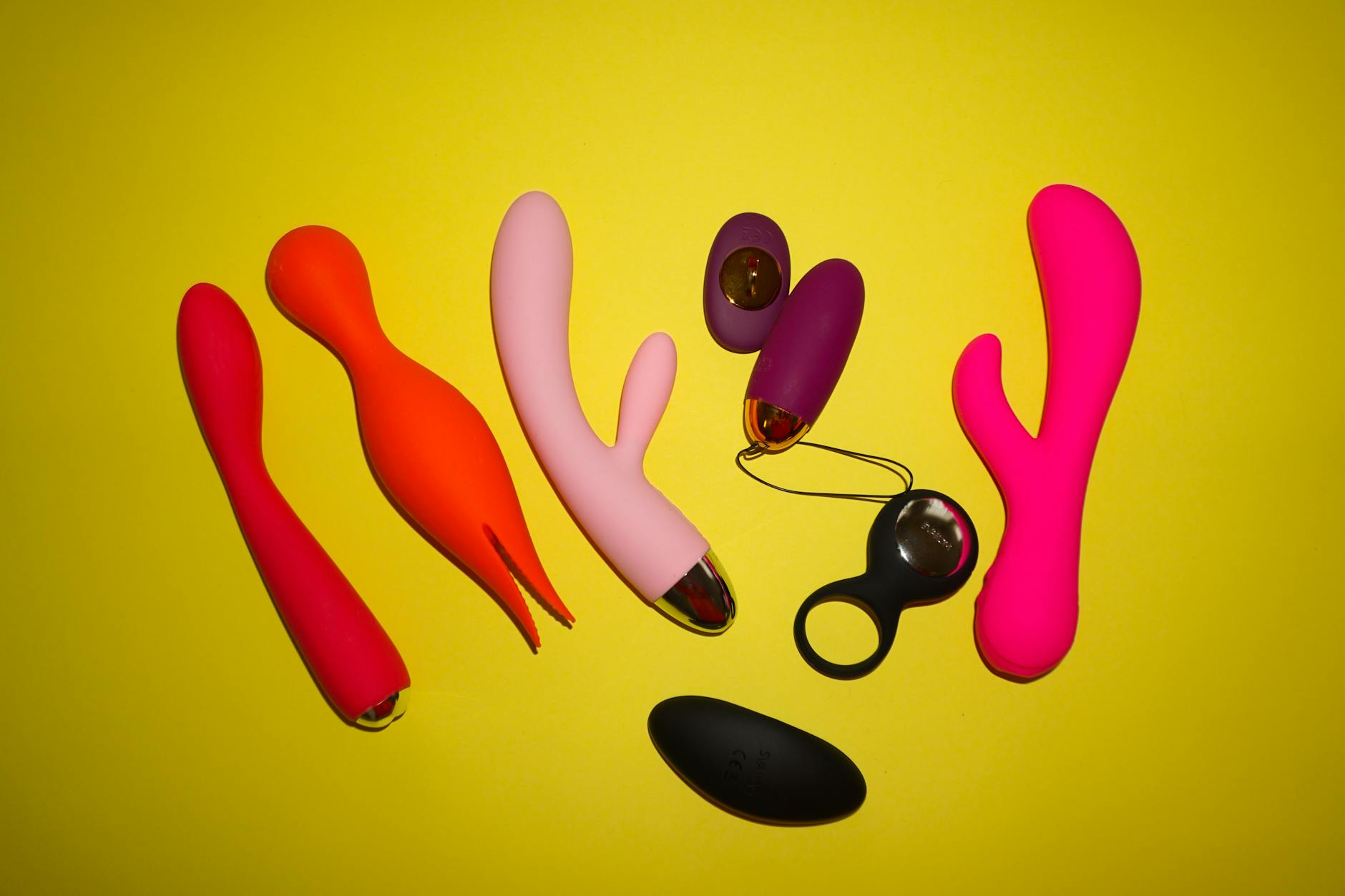
Photo by FounderTips on Pexels
The anatomy factor nobody talks about
Your sensitivity also depends on anatomy. The clitoris is partially internal, and where it sits varies person to person. Some people have a clit that sits more forward and exposed. Others have more of it tucked under the hood. This changes what kind of contact feels good and what feels like too much pressure.
If you're not sure where you fall, spend five minutes with your own fingers, no pressure, just noticing. Does direct touch feel good, or does touch through the hood feel better? That answer tells you something important about toy choice. If hood touch works better, you want a toy that can apply sensation through fabric or at a slight angle. If direct touch is your thing, you want something with a shape that lets you position it precisely.
Anatomical variation is also why one person swears by a specific lemon vibrator and their friend finds it uncomfortable. Neither is wrong. You're just built differently, and that's the whole reason you need to choose based on your own body, not reviews.
The warming-up question
One of the biggest mistakes people make is jumping straight to full power. Sensitivity responds to warm-up. If you start at 30% power and gradually build over ten to fifteen minutes, you're training your nervous system to accept more sensation. Start at 80%, and you're overwhelming it.
For highly sensitive types, I recommend toys with at least five speed settings. This gives you fine-grained control. For everyone else, three to four speeds is usually enough.
Also, lube helps. Water-based lubricant reduces friction and can make moderate sensation feel gentler. If you're finding that a toy feels too intense even at low speeds, adding lube is often the first thing to try before you assume the toy is wrong.
Internal sensitivity versus external
External clitoral sensitivity and internal vaginal sensitivity are not the same. You might have a sensitive vulva and a less sensitive vagina, or vice versa. This matters because some toys are designed for external use, some for internal, and some for both.
For external sensitivity, you're looking at clitoral vibrators. That's the lemon vibrator category. For internal sensitivity, you'd be looking at something with a broader head and usually lower power. If you're using something for both, start with the assumption that your clitoris is more sensitive and adjust from there.
This is also worth checking in with your partner about, if you're using toys together. How to use a lemon clitoral vibrator with your partner without awkwardness covers that conversation in detail.
Medication and sensitivity shifts
If you're on SSRIs, blood pressure medication, or hormonal birth control, your sensitivity may not be what it was six months ago. Medications change how your nervous system responds to stimulation. Same with menopause, post-birth, or high stress. This isn't permanent. It's a signal to adjust your tool.
This is also true if you've had a long break from pleasure. Your body's response can feel dull for the first few sessions. That's not a reason to buy something more powerful. It's a reason to be patient and let your sensitivity rebuild naturally.
The test drive approach
Honestly, the best way to know if a toy is right is to spend a week with it. One session isn't enough. Your body needs time to figure out what it likes about a particular rhythm, intensity, and shape. If a toy feels wrong in session one but you're curious, give it three sessions before you decide.
Also, there's no such thing as starting wrong. If you buy a toy and it turns out it's not your match, you've learned something valuable about your preferences. That information is worth the investment. And if you find a match, you've found something that might genuinely change how you experience pleasure.
When sensitivity changes mid-relationship
If you've been using the same toy for years and it suddenly feels too intense or not intense enough, that's not a sign to ignore. Your sensitivity has shifted. Why lemon vibrators work better for sensitive vulvas goes deeper into this, but the short version is: your body is telling you it needs something different. Listen to it.
This also applies to partnered pleasure. If your sensitivity has shifted and your partner hasn't noticed, that conversation is worth having. "My body's responding differently lately" is information your partner needs if they want to keep things good between you.
Frequently asked questions
Can sensitivity go back to normal after it shifts?
Yes, often. If the shift is stress-related or medication-related, you'll usually see sensitivity normalize once the stressor is gone or you switch medications. If it's hormone-related, like post-menopause or post-birth, it takes longer, but responsiveness does return. Patience and the right tools make the wait easier.
Is it normal to need stronger stimulation over time?
It's common, but not universal. Some people do build a tolerance and need more intensity. Others stay the same for decades. If you notice you're needing stronger and stronger stimulation, take a break for a week or two and let your sensitivity reset. That often works better than buying a more powerful toy.
What if nothing feels good right now?
That's usually stress, medication, or disconnect from your body. A toy can't fix those. What a toy can do is give you a reason to slow down and pay attention. Sometimes that's all it takes to remember what pleasure feels like. If nothing works after a month of trying, and you're not in a major life transition, it's worth talking to a healthcare provider. Loss of sensation is a real symptom, and it's treatable.
Do I need multiple toys for different sensitivities?
Not necessarily. One well-chosen toy usually works across a range of sensitivity states. But if you find yourself wanting something gentler and something stronger, having two is fine. Most people don't need more than that.
Is suction actually gentler than vibration?
Generally yes, especially if you're sensitive. Suction spreads sensation wider and doesn't create the same focused pressure that buzzing does. That said, some people with sensitive vulvas actually prefer buzzing, and some with lower sensitivity prefer suction. The only way to know is to try. Best lemon vibrator positions for different body types also touches on how positioning changes the sensation, which matters for sensitivity.
What if my sensitivity is different from my partner's?
That's the normal state of things, honestly. You and your partner are different people with different bodies. One of you might need a gentler toy, one might need more power. The solution is usually to have a conversation about what you each actually want, then find a toy that works for both of you, or get two. No judgment either way.
The bottom line
Choosing the right lemon vibrator comes down to knowing your own body first. Spend time noticing what kind of touch feels good, what intensity works, whether you prefer direct or indirect stimulation. Write it down if it helps. Then match those preferences to a toy.
Sensitivity isn't fixed, and it's not shameful to need something different than you did before. Your body is telling you what it needs. The point of a good clitoral vibrator is to listen to that and respond. When you get it right, you'll know. And you'll use it.
If you want to go deeper into how to actually use a lemon vibrator once you've chosen one, contact us or explore our guides. You deserve pleasure that actually fits, not something that makes you uncomfortable in the name of doing it right.