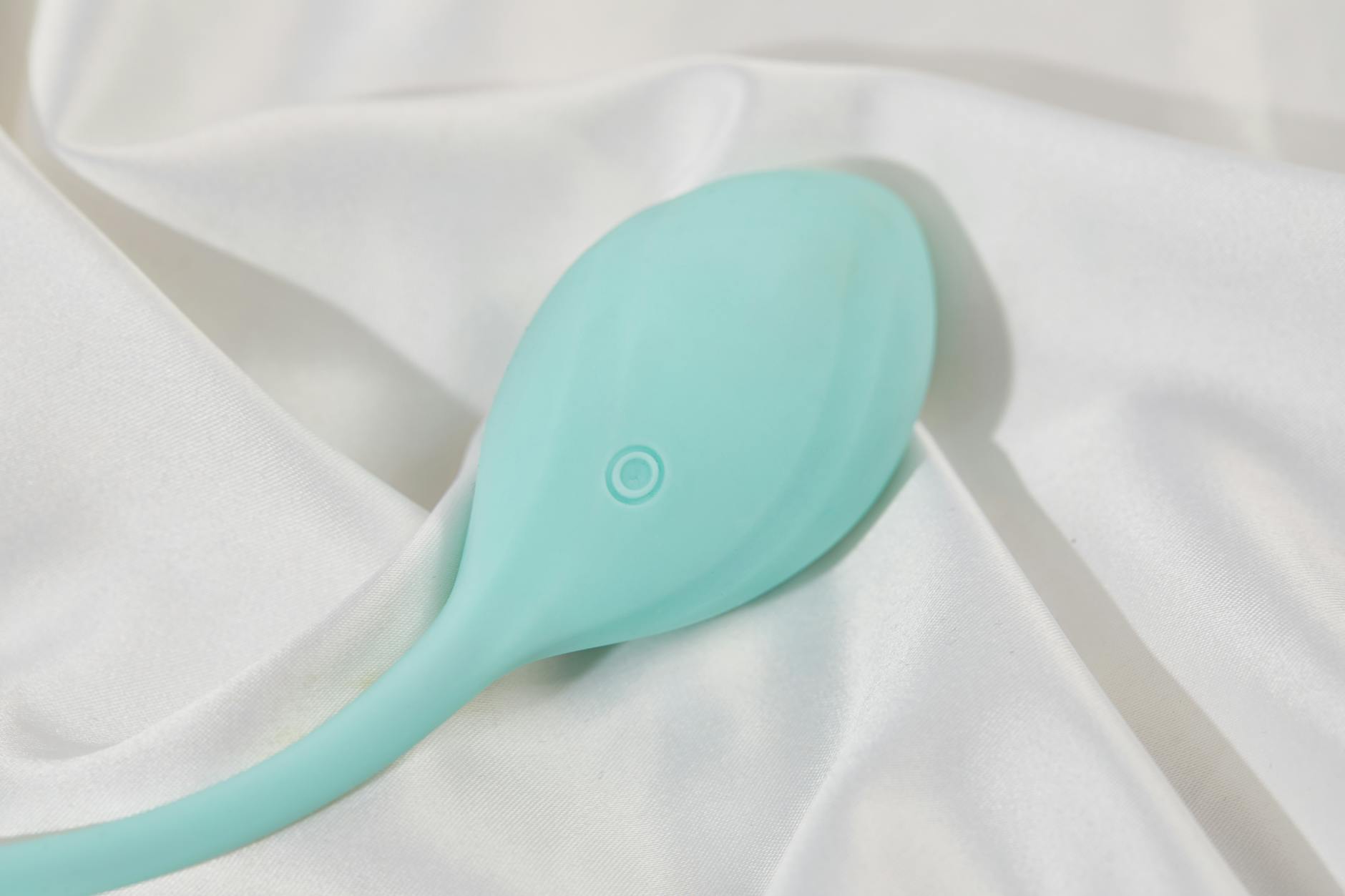
Your body isn't static, and your toy shouldn't be either
Honestly, the menstrual cycle gets talked about like it's this obstacle course you have to run every month. But here's what most sex toy advice misses: your cycle isn't the problem. A toy that can't adapt to your changing needs is.
Your sensitivity, arousal speed, and what feels good shift measurably throughout the month. A lemon vibrator, with its unique suction mechanism, handles those shifts in ways that traditional vibrators simply can't match.
How your body actually changes across the cycle
Let's map this out without the clinical jargon. During the follicular phase (the week or so after your period ends), estrogen climbs. Your clitoral tissue becomes more engorged, more sensitive to touch, and your arousal ramps up faster. This is peak sensitivity territory.
Then ovulation hits. Testosterone spikes alongside estrogen, and you hit the sweet spot: maximum blood flow to the pelvic region, heightened sensation, and often the easiest time to orgasm all month.
The luteal phase is different. Progesterone rises, estrogen drops, and your clitoral tissue becomes less engorged. Your body needs more time to warm up. Sensation feels duller. What felt amazing last week might feel uncomfortable now.
Then your period arrives, and sensitivity is all over the map. Some people feel numb. Others are wildly sensitive. This variation is completely normal.
Why traditional vibrators fail during cycle shifts
A standard vibrator is a one-tool solution: it buzzes at the same frequency, with the same force, regardless of where you are in your cycle. When your tissue is less engorged during the luteal phase, that same buzzing intensity can feel either too harsh or too distant. You're either grinding away trying to feel anything, or wincing because it's overstimulating thinner tissue.
The pacing is locked in. Your body isn't.
Why lemon vibrators handle cycle sensitivity better
Lemon clitoral vibrators work through pulsing suction, not friction-based vibration. That mechanism has three major advantages across your cycle.
First, suction stimulates without raw friction. During the luteal phase, when your clitoral tissue is less engorged and more delicate, suction creates sensation through pressure and rhythm rather than the direct buzzing that can feel abrasive. You get pleasure without the ouch.
Second, suction adapts to your body's engorgement. When your tissue is full and responsive during ovulation, the suction effect is intense and immediate. When you're in the luteal phase and your tissue is less swollen, the same suction intensity feels gentler because there's less tissue to engage. The toy adjusts to your body, not the other way around.
Third, pattern variety matters more than raw power. The lemon vibrator offers multiple pulsing patterns. During the follicular phase when you want quick build-up, a faster pattern works beautifully. During the luteal phase when arousal takes longer, you can start with a gentler, slower pattern and let your body gradually engage. You're matching the toy to your phase, not fighting against a one-size-fits-all buzz.
How to use a lemon vibrator across your cycle
Four practical shifts I recommend to most clients.
Follicular phase (days 1-14 of a typical cycle). Your tissue is recovering and then ramping up. Start at pattern 1 or 2 for the first few days. Once ovulation approaches, intensity patterns 4-5 work beautifully because your body is primed. Arousal is fast. You want speed.
Ovulation window (days 12-16). This is often the easiest time. Most people report the quickest orgasms and the highest intensity sensations. Here's where you can explore the highest pattern settings on the lemon vibrator without discomfort. Your body is ready.
Luteal phase (days 17-28). Everything slows down. Your tissue is less engorged. Budget extra warm-up time. Start with pattern 1 or 2 and stay there longer than you think you need to. Some cycles you'll graduate to pattern 3. Others, pattern 1 is perfect. There's no failure here. You're listening to your body.
Menstruation (days 1-5). Sensitivity is chaotic. Some people feel numb and want intensity. Others are hypersensitive and want gentle. The range of patterns on a lemon vibrator lets you find exactly where you land. If you're tender, stay at pattern 1. If you want more, go up. The flexibility is the point.
The emotional load of adapting to your cycle
One thing I see a lot in my practice: people feel broken when their body changes across the month. "Why can't I just be consistent?" I hear this in relationship contexts especially. A partner might wonder if they're doing something wrong, or if you've lost interest.
Here's the truth. Your cycle isn't a flaw. It's information. A lemon vibrator that adapts to your changing needs is actually a communication tool. It lets you work with your body's rhythm instead of against it. That's not complicated or annoying. That's you being intelligent about your own pleasure.
When to track your cycle for better results
I'm not suggesting you need to calendar your orgasms. But if you're finding that some weeks feel wildly different from others, tracking gives you clarity. Note which patterns feel best on which days. After a couple of cycles, patterns emerge. You'll know that ovulation week is pattern 4 territory, but luteal phase is pattern 1-2.
That knowledge is power. You stop blaming yourself for inconsistency and start planning around it.
Beyond the toy: partner communication during cycle shifts
If you have a partner, the single most useful conversation you can have is separating two things: your changing sensitivity across the month, and emotional intimacy. These aren't the same thing. You might need a different kind of touch during the luteal phase not because you care less, but because your body is literally different.
A lemon vibrator can actually help this conversation. "This week I want to start with pattern 1" is clearer than "I don't know, something feels off." The tool becomes a way to articulate what your body needs.
The wider picture: cycle syncing beyond pleasure
This isn't woo. Your cycle affects sleep, energy, mood, appetite, and yes, sexual response. Some research suggests that working with your cycle rather than fighting it improves overall wellbeing. That includes pleasure.
When you use a toy that can adapt to your changing body, you're not fighting your biology. You're honoring it. And that shift in perspective often changes everything.
FAQ: Lemon vibrators and hormonal shifts
How do I know if my sensitivity changes are normal across my cycle?
Completely normal. Most people report measurable shifts in clitoral sensitivity, arousal speed, and what intensity feels good. The follicular phase is typically peak sensitivity. The luteal phase usually requires more warm-up and gentler intensity. If your shifts are extreme (like, suddenly painful), talk to a doctor. Otherwise, this is your body working as designed.
Can I use the same pattern every day?
Yes. But if you're noticing that a pattern feels different depending on the day, that's your cycle at work. You don't have to change patterns. You get to change them. The beauty of a lemon vibrator is the flexibility. Use what feels good that day.
Do I need to stop using my lemon vibrator during my period?
No. Some people find that suction intensity during menstruation feels amazing. Others want gentler stimulation. There's no right answer. The lemon vibrator's range of patterns means you can meet yourself where you are. Just make sure it's clean, and if you use it during your period, you might want to use a different lubricant than you would any other time.
Why does suction feel better than vibration during the luteal phase?
During the luteal phase, your clitoral tissue is less engorged because progesterone is rising and estrogen is dropping. Direct vibration on less-engorged tissue can feel either muted or uncomfortable. Suction works differently. It creates sensation through pressure and rhythm rather than friction. That mechanism is gentler on delicate tissue while still delivering intense sensation. It's why lemon clitoral vibrators feel so different from traditional vibrators as your cycle shifts.
Can hormonal birth control change how my lemon vibrator feels?
Yes. Birth control suppresses the hormonal fluctuations that create your cycle. Some people on hormonal birth control report more consistent sensitivity throughout the month. That means you might find one favorite pattern and stay there. Others on birth control still experience sensitivity shifts. It's individual. Pay attention to your body, not to what "should" happen.
What if my cycle is irregular or I don't menstruate?
Sensitivity shifts exist independent of a "perfect" 28-day cycle. If your cycle is longer, shorter, irregular, or absent due to birth control, medication, or any other reason, you might still experience sensitivity changes. Some happen over weeks. Some over days. The lemon vibrator's range of patterns still serves you. Use it as a tool to explore what your body needs on any given day.
Your body deserves a tool that listens
Here's the thing about pleasure and your cycle. You're not broken for changing. The toy is broken if it can't adapt. A lemon vibrator, with its suction mechanism and pattern variety, actually listens to your body's shifts. It works during your peak sensitivity week and your harder-to-access week the same way. That's not a small thing. That's informed, intelligent pleasure.
The more you understand your cycle, the better you can use a lemon vibrator. And the better you use it, the more you learn about your body. That feedback loop is where real sexual agency lives.