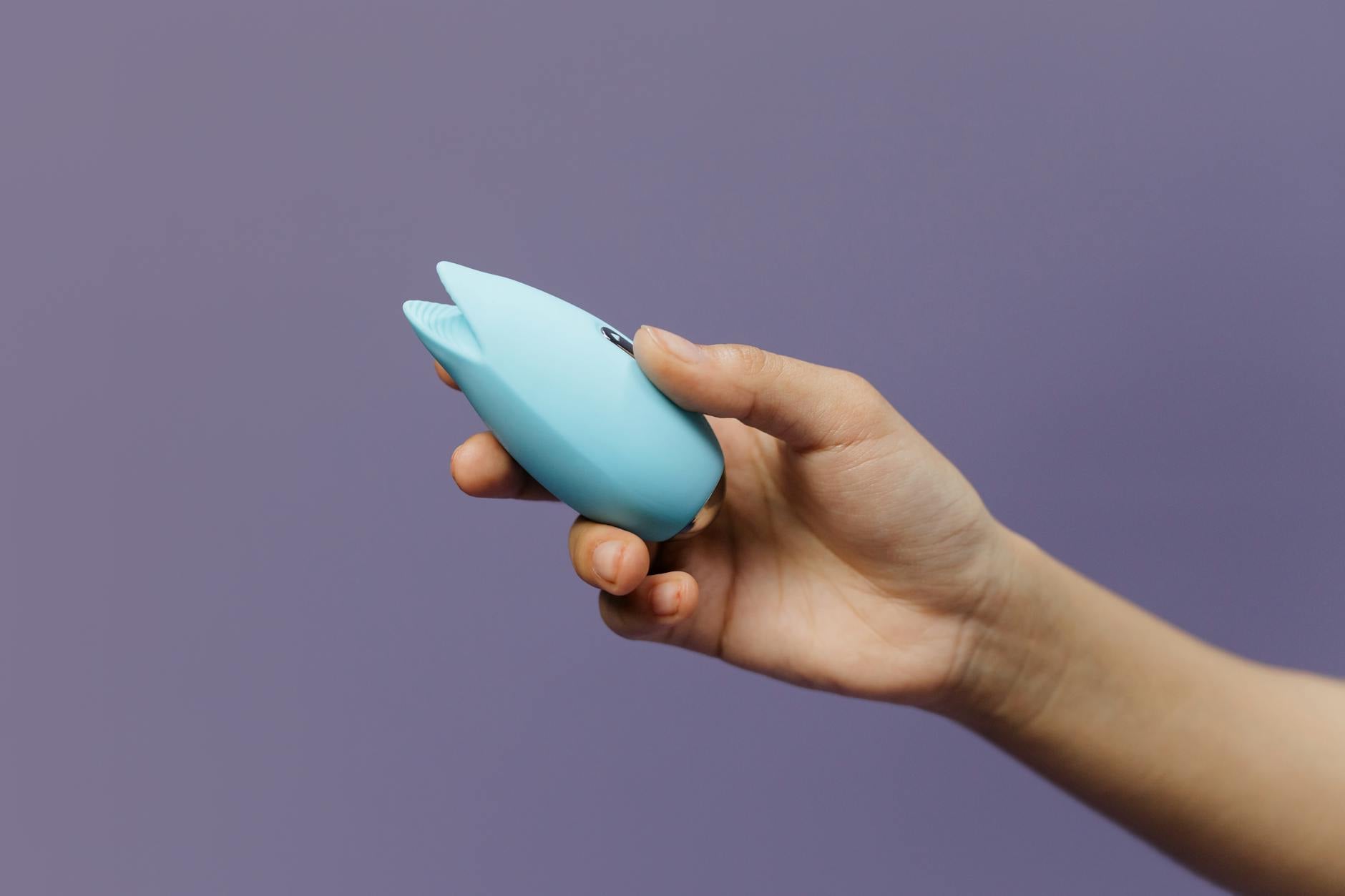
Let's talk about your cycle and pleasure
Here's the thing most people don't realize: the sensitivity of your clitoris literally changes throughout your menstrual cycle. You're not imagining it. It's not in your head. Your nervous system is responding to real, measurable shifts in estrogen and progesterone, and that changes how your lemon vibrator feels against your body.
This matters because when you understand the rhythm, you can stop fighting your body and start working with it. That means better orgasms when conditions are right, and less frustration on days when sensation is muted.
What actually happens hormonally
Your cycle has four phases. Each one brings a different hormonal cocktail, and each one changes clitoral blood flow and nerve sensitivity.
Menstruation (days 1-5 roughly). Estrogen and progesterone are both low. Your clitoris has less blood flow. Sensation can feel flattened or numb. This is completely normal. Some people want nothing to do with stimulation during this phase. Others find that because there's less background stimulation happening naturally, they actually need more deliberate touch to feel anything at all.
Follicular phase (days 5-13). Estrogen begins climbing. Your clitoris starts engorging with blood. Nerve sensitivity ramps up. This is when many people first notice that their lemon vibrator feels stronger, or that lower intensity settings suddenly feel like enough. You're not being more sensitive. Your body is literally more responsive.
Ovulation (day 14). Estrogen peaks, then drops hard. Your clitoris reaches peak blood flow and engorgement. This is when a lot of people report the most intense orgasms of their cycle. Your sensitivity is at its highest point. This is also when you might find that you need less time to warm up, or that you can reach orgasm on lower intensity settings that wouldn't have worked a week ago.
Luteal phase (days 15-28). Progesterone rises. Estrogen drops. Your clitoris gradually loses some engorgement. Sensation starts to dull again. Some people find they need higher intensity settings or longer stimulation time to get the same result. Others report that sensation starts to feel sharper or more localized instead of broad.
How this translates to using your lemon vibrator
Understanding these phases is useful. Actually using that knowledge is where it gets practical.
Mid-cycle (ovulation window). If you want to experiment with patterns you find too intense normally, this is your window. Try pattern 7 or 8 on your lemon vibrator during your follicular phase or ovulation, when you actually have the nerve density to support it without pain or overstimulation. The same intensity will feel gentler because your tissue is more engorged and better equipped to handle it.
You might also notice you need less warm-up time. Budget 8-12 minutes instead of your usual 20. Your body is primed already.
Late luteal (the week before your period). This is when a lot of people reach for their suction toys but find the sensation muted. Your clitoris has less blood flow. The tissue is less engorged. This doesn't mean something is wrong. It means you might need to start at pattern 3 or 4 instead of pattern 5, and give yourself extra time. Or honestly, some people find that this phase just isn't their pleasure phase, and that's completely fine. Not every day of your cycle needs to be optimized for orgasm.
The mental side matters as much as the physical side
Hormones don't just change your clitoral sensitivity. They change your brain chemistry. During the follicular phase and ovulation, dopamine rises. Desire naturally increases. You're more likely to seek stimulation. Your brain is literally more responsive to reward.
During the luteal phase, dopamine drops relative to progesterone. Your brain is less reward-focused. This is a feature, not a bug. This is when you might prefer emotional intimacy, conversation, or rest over solo play. Fighting against this creates stress, which dampens arousal even more. Working with it transforms the whole month.
That said, not everyone's experience maps perfectly to textbook cycles. If you have PCOS, endometriosis, or other conditions that mess with hormonal patterns, your cycle might not follow the clean four-phase model. If you're on hormonal birth control, your cycle is artificially flattened, and you might not notice these shifts at all. Tracking your own experience over 2-3 months is more useful than any generic timeline.
Tracking what actually happens for you
I'd suggest spending a cycle tracking three things: your sensation level (1-10 scale), your desire level, and which settings on your lemon vibrator feel best. You don't need an app. A note in your phone or on your calendar works.
After a couple months, patterns emerge. You'll see exactly when your most responsive window is. You'll know which week is best for trying new patterns or higher intensities. You'll know when to lean into what works instead of chasing something that isn't happening today.
That's not restrictive. That's empowering. You're not fighting your body's natural rhythm. You're timing your pleasure strategically.
What if your cycle is irregular
Irregular cycles are more common than you think. Stress, diet changes, intense exercise, weight shifts, travel, and age can all flatten or scramble your hormonal pattern. If your cycle is all over the place, detailed tracking becomes even more useful because you can't rely on calendar counting.
You might also notice that the intensity of sensation changes less dramatically if your hormone levels are fluctuating less. This isn't a problem. It just means you're working with a different baseline.
If you've suddenly moved from regular cycles to erratic ones, and it's bothering you, that's worth checking in with a doctor. Sometimes it's nothing. Sometimes it flags something worth addressing. But the pleasure piece doesn't have to wait. You can still learn your body's current patterns and optimize around them.
The pattern-switching strategy
Here's what many Hello Nancy customers report discovering once they start tracking: you don't need more toys. You need to know when to switch your settings.
On high-sensitivity days, start at pattern 1 or 2 instead of your usual starting point. You'll likely reach orgasm faster and find the experience more comfortable. Your tissue is engorged, your nerve density is up, and lower intensity is actually stimulation-rich.
On lower-sensitivity days, jump straight to pattern 4 or 5 and budget more time. Your clitoris has less blood flow, so you need more input to register. This is also when longer sessions (25-35 minutes instead of 15) can make a real difference.
The settings on your lemon vibrator aren't one-size-fits-all across your whole month. They're tools you adjust based on what's happening hormonally right now.
Partnered play across your cycle
If you have a partner, this rhythm can deepen connection if you talk about it. "This week I need more time and stronger patterns" is different from "I'm not interested." One is a logistical adjustment. The other is a boundary.
When you can say, "Ovulation is next week and I'll probably want to play then," or "This week I'm more interested in just being held," you're giving your partner useful information. You're also reminding them that your sexuality isn't broken or flat. It's rhythmic. That's not a flaw. That's how biology works.
For solo play, understanding your cycle removes a lot of shame and frustration. You're not failing at pleasure. Your body is following a pattern that's been coded into human physiology for a really long time.
FAQ: Cycle, sensation, and your lemon vibrator
Why does my clitoris feel numb during my period?
Both estrogen and progesterone are at their lowest during menstruation. Lower estrogen means less blood flow to your clitoris, which means less engorgement and less nerve sensitivity. Your clitoris isn't broken. It's responding to a real hormonal shift. Blood flow returns as estrogen starts to climb in the follicular phase.
Can I use my lemon vibrator during my period?
Yes, absolutely. Some people prefer not to. Others find that suction sensation feels good during menstruation precisely because sensation is muted and they need more input. Comfort is the only rule. If you want to, you can. If you don't, you don't have to. There's no medical reason you can't use a lemon clitoral vibrator while menstruating.
Why do orgasms feel different around ovulation?
During ovulation, estrogen peaks and your clitoris reaches maximum blood flow and engorgement. Your nervous system is flooded with dopamine. You have more nerve endings available for stimulation. All of these things together create conditions for more intense sensation and easier orgasms. It's not that you're "better at it." Your body is literally more equipped for intense pleasure right then.
Will tracking my cycle change how I experience pleasure?
Yes, usually in a good way. Instead of fighting your body on days when sensation is naturally muted, you work with your rhythm. You use lemon vibrator settings strategically. You adjust your expectations based on where you are in your cycle. This removes a lot of frustration and actually increases overall pleasure across the month.
What if I'm on birth control and don't have a real cycle?
Hormonal birth control flattens your natural cycle. You might not notice the dramatic shifts in sensation described here. That doesn't mean your clitoris doesn't change at all. Some people on birth control still experience subtle shifts in sensitivity. Some don't. The best approach is to track your own experience over a month or two and see if patterns emerge. If sensation feels stable across the month, great. That's useful information too.
How long does it take to see patterns once I start tracking?
Most people notice clear patterns within 2-3 cycles. You need enough data points to see the rhythm emerge. The first month is usually just gathering baseline information. By month two, you'll likely spot when your peak sensation window is. By month three, you'll be able to predict it with reasonable accuracy.
The bigger picture
Your menstrual cycle isn't a bug in your sexuality. It's a feature. Your body isn't being inconsistent. It's being honest about hormonal reality. When you stop fighting that rhythm and start tracking it, pleasure becomes less of a guessing game and more of a practice you can refine.
The goal isn't to have perfect orgasms every single day. The goal is to understand your body well enough that when conditions are right, you maximize them. And when they're not, you know why and can adjust accordingly.
Start tracking this cycle. Note your sensation level, your desire, and which settings feel best. In three months you'll have a whole new relationship with your body and your lemon vibrator. That's genuinely worth the five minutes a day it takes to notice.
Ready to explore this? Check out our buying guide to find the right tool for your sensitivity level, or reach out if you have questions about what might work best for your body.