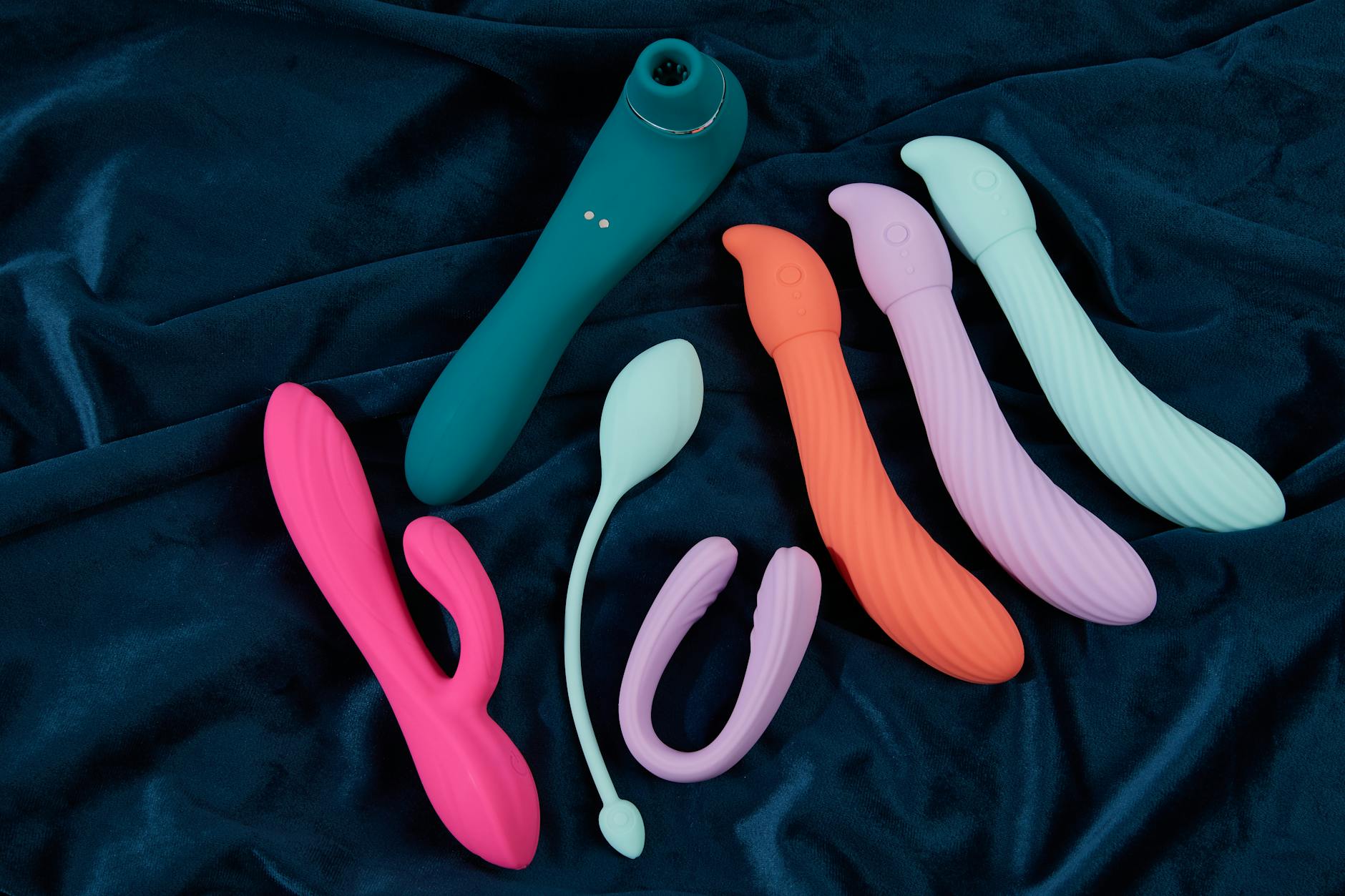
The thing nobody tells you about performance pressure
You're already nervous. You've been nervous for months, maybe years. The thought of sex comes with a background hum of dread because somewhere along the way, you started believing that your body has to deliver a flawless performance or the whole thing fails. And bringing up toys? That feels like admitting you're not enough. Which is the exact opposite of the truth, but anxiety doesn't care about facts.
Here's what I see in my practice every single week: partners introducing a lemon clitoral vibrator not because anyone is broken, but because one person (usually quietly, with a lot of shame) decided that performance anxiety was more bearable than honest conversation. The good news is that the vibrator conversation is actually the gateway to the real conversation you both need to have.
What performance anxiety actually is
It's not doubt about your attractiveness or your technique. It's the belief that your body is responsible for your partner's pleasure in a way that makes you accountable for their orgasm, their satisfaction, their entire experience. That belief turns sex into a pass-fail test, and your nervous system treats it like one. Your cortisol spikes. Arousal shuts down. You can feel your body disconnecting from the moment. And then you panic because you're not aroused, which makes sense because you're terrified.
This loop hits everyone. Women worry about lubrication. Men worry about lasting long enough. Non-binary partners worry about being desired. What they all share is the false belief that their role is to perform, not to be present.
Introducing a lemon vibrator with your partner doesn't solve the performance anxiety. But it does something better: it breaks the illusion that pleasure is a solo act that one person controls.
Why the conversation has to come first
You cannot hand your partner a toy and expect them to understand why you want it without talking. That silence gets filled with their own anxiety, and suddenly they think you're bored with them or they're not doing it right. Instead, the vibrator becomes a symbol of what you couldn't say out loud.
The conversation needs three parts.
Part one: Your body, your choice. "I've been thinking about exploring pleasure differently. Not because anything is wrong, but because I want to feel more during sex. That matters to me." Notice you're not saying "you're not doing it right." You're not saying "I need help." You're saying "I want something for myself."
Part two: Curiosity, not critique. "I'd like to try using a lemon vibrator with you. I'm actually pretty nervous about bringing this up, but I think it could feel good for both of us." The admission of nervousness is crucial. It humanizes the moment and gives your partner permission to be nervous too.
Part three: An invitation, not a demand. "Would you be open to trying this together?" And then you have to actually let them say no. If they say no, you hear what's underneath the no. Is it jealousy? Shame? Fear they're not enough? That's the real work.
How to actually introduce the vibrator
Don't lead with the toy. Lead with skin.
Start with touch exactly as you normally would. Don't change the rhythm or the pressure or the foreplay routine. Build arousal as you would, and then when things are already warm, when you're both already present, introduce the idea casually. "I want to try something I've been thinking about." Bring out the lemon vibrator. Let them see it. Let them hold it if they want.
Start on the lowest setting. Not because you can't handle intensity, but because starting gentle gives your nervous system a chance to adjust to the new sensation without triggering a panic response. Your pelvic floor can hold tension when you're anxious, which makes stimulation feel too intense. Low intensity feels safer.
Position it at an angle rather than directly on your clitoris if this is your first time with your partner. Indirect stimulation feels less jarring when you're already managing performance anxiety. The lemon's suction design is gentler than traditional vibrators, which actually helps here. You're getting stimulation without the feeling that you have to "perform" an orgasm immediately.
Keep talking. Not dirty talk if that feels like more pressure. Just communication. "That feels good." "A little softer." "I like when you touch me here while I use it." Your partner needs to stay engaged, and you need to feel like you're in this together, not like they're watching a solo show.
The role your partner actually plays
This is where the real shift happens. Your partner's job is not to be replaced by the vibrator. Their job is to notice what you enjoy and to stay connected to you while you explore. That might mean they're still touching you elsewhere on your body. It might mean they're watching your face and adjusting based on what they see. It might mean they're using the vibrator on you while you guide the pressure.
The vibrator is not taking their place. It's expanding what's possible in the room.
If you orgasm, great. If you don't, that's fine too. The goal here is not to prove the toy works. The goal is to show both of you that pleasure doesn't have to be a solo performance where one person bears all the weight of success. That alone changes the dynamic.
After: Talk about it without dissecting it. "That felt different." "I liked when you..." "I want to try...next time." You're building a shared language around your pleasure, which is what your partner actually needed from you all along.
When your partner is nervous too
Often they are. They might worry the vibrator means they're not enough, or that you prefer it to them, or that they're supposed to use it and they won't do it right. Your job is to be clear: this is something you're doing together, not something he (or she or they) is failing at.
Show them it's not a judgment on them. Explain that lemon clitoral vibrators work the way they do because of how nerve endings respond to suction and pulsation, not because your partner's touch isn't good. It's different, not better. Different is what you need right now.
If they want to be hands-off while you explore with the vibrator alone first, that's valid too. Some partners need to see you comfortable with it before they want to be in the room. That's not rejection. That's them managing their own anxiety, which is actually growth.
The permission you're actually looking for
You already know this, but I'm going to say it anyway: you don't need your partner's permission to want more pleasure. You don't need their approval to buy a lemon vibrator or any other toy. You don't need them to validate that your body deserves attention.
What you do need is to stop performing and start being honest. The vibrator is just the prop that makes honesty feel safer. Once you've had the conversation, once you've introduced the toy, once you've both realized that pleasure isn't a zero-sum game where one person wins and one loses, everything shifts.
You get to want what you want. Your partner gets to be part of that wanting with you. The lemon vibrator gets to do what it was designed to do. And performance anxiety? It finally has nowhere left to hide.
People also ask
How do I bring up wanting to use a vibrator with my partner if they've never mentioned toys before?
Start by separating your request from criticism. Frame it as something you want to explore for yourself, not something they're failing to provide. Try: "I've been curious about trying something new in our sex life. I'm bringing this up because I trust you and I want to experience it with you." The trust language matters. It reframes the vibrator from "you're not enough" to "I feel safe exploring with you."
What if my partner says no to using a lemon vibrator together?
Listen to what's really underneath the no. Is it shame about toys? Fear of being replaced? Religious beliefs? Once you know the actual objection, you can address it. If it's "I think toys are weird," that's a conversation about normalizing pleasure. If it's "I'm worried you'll like it better than me," that's a reassurance conversation. The vibrator isn't the real issue. The belief system is.
Should I use the lemon vibrator alone first before introducing it to my partner?
Yes, if it helps you feel less anxious. Using it solo lets you understand your own response without the pressure of someone watching. You learn what patterns feel good, what intensity you prefer, and how your body responds. That knowledge makes the partner conversation less scary because you're not figuring out your own pleasure in real time in front of them. But don't feel like you have to. Some people prefer to explore together.
Can using a lemon vibrator actually reduce performance anxiety or does it just distract from it?
It does both. In the moment, yes, it's a distraction from the anxious thought pattern. But over time, using a lemon clitoral vibrator with your partner teaches your nervous system that pleasure can be shared and gentle and doesn't require a flawless performance. Once your brain learns that, performance anxiety loses its grip. You're not anxious anymore because you're not performing anymore.
How long should I use the lemon vibrator during sex with my partner?
There's no timer. Stop when it stops feeling good. Some sessions you'll use it for five minutes. Some for twenty. Some sessions you'll bring it out and decide you'd rather have direct touch instead. The goal isn't to use it for a certain duration. The goal is to stay present and enjoy what's actually happening, not what you think is supposed to happen.
What if I orgasm with the vibrator but not with my partner's touch alone?
Your body isn't broken. Your nervous system is just responding more readily to a specific type of stimulation. That's true whether it's the vibrator or manual touch or something else entirely. Having an orgasm with the vibrator and then continuing with your partner afterward is perfectly normal. You're not supposed to get all your pleasure from one source. That's not how bodies work.
The real shift
Introducing a lemon vibrator to your partnership isn't really about the toy. It's about choosing honesty over performance. It's about deciding that your pleasure matters as much as the pleasure you're trying to create for someone else. It's about letting your partner see you want something and trusting them enough to ask for it.
That's the conversation that changes everything. The vibrator just makes it easier to have.