Let's be real about aging and pleasure
Your partner's body has changed. So has yours. The speed at which they used to respond to touch isn't the baseline anymore. Their preferences have shifted. Maybe they need more direct stimulation now, or less. Maybe intensity that felt good at 35 feels jarring at 55. None of this means pleasure is gone. It means the map has changed, and you're learning it together.
The tricky part is that most couples never actually talk about this. You either keep doing what worked before (which stops working) or you both pretend nothing changed (which breeds resentment). Neither works. But here's what does: honest conversation, a willingness to slow down, and tools that are flexible enough to adapt as sensation shifts. That's where lemon vibrators come in.
Why aging changes sensation (and what actually happens)
This isn't abstract. As we age, blood flow to the genitals takes longer to increase. Neural sensitivity doesn't disappear, but the chain reaction takes time. For people with vulvas, tissue thins slightly, lubrication changes (whether or not menopause has happened), and the entire arousal timeline extends. For people with penises, erection takes longer, sensitivity shifts, and recovery between orgasms gets longer.
The cultural message is that this is a problem to fix. It's not. It's a direction change.
What doesn't change: the clitoris has the same nerve density it always did. The capacity for orgasm is there. The ability to feel pleasure is intact. You're just working with a different rhythm now.
Why lemon vibrators are better for this transition
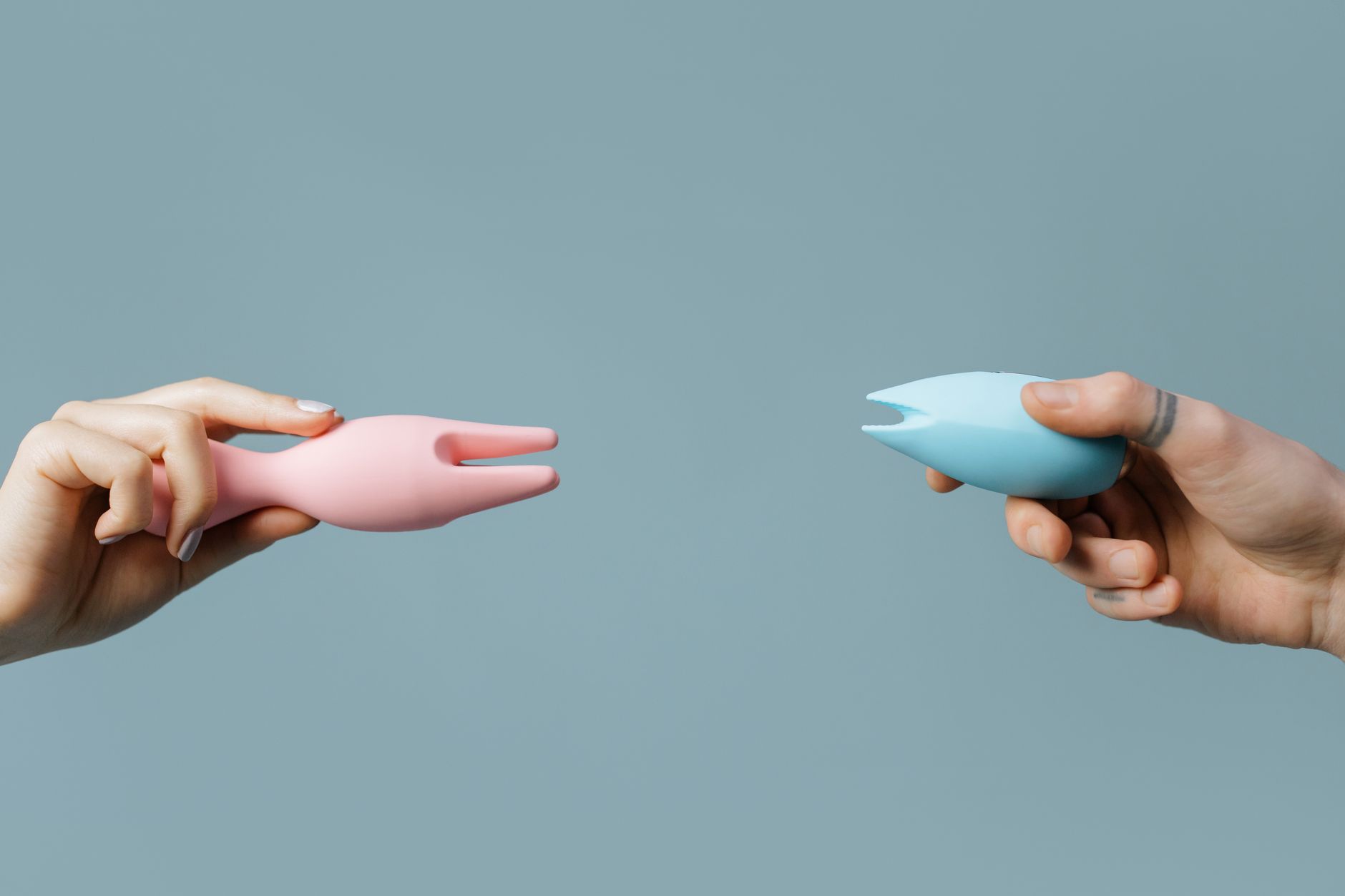
Most vibrators rely on frequency and intensity alone. They buzz hard and fast, and if sensation takes longer to build, you're stuck waiting for something that works on an old timeline. Lemon vibrators (and particularly air-suction devices like the Lem) work differently. Instead of pure vibration, they use gentle suction that stimulates nerve clusters without overwhelming tissue that's become more sensitive with age.
That suction-based stimulation means you can start at a lower intensity and let it build gradually. You don't need to crank everything to maximum to get a response. For partners whose sensation has shifted, that's huge. It also means you can adjust on the fly. Pattern 1 might be your entry point now instead of jumping to pattern 4. That flexibility matters when you're learning a new map.
The conversation you actually need to have
Before technique, before any toy, you need to know what's changed for your partner. Not assumptions. Actual data.
Ask: "How has pleasure changed for you in the last few years?" Listen without fixing. Ask: "What feels good now that didn't feel great before?" Ask: "What's too intense?" Ask: "How long do you need to warm up?" These aren't clinical questions. They're intimacy questions. They say: I notice you. I want to understand your body right now, not the body I remember.
Then tell them what's shifted for you. If your preferences have changed, your stamina, your arousal speed, your needs. This isn't a therapy session. It's a real conversation between two people who've been together long enough to know that bodies change and that matters.
How to adjust your technique with a lemon clitoral vibrator
Start lower than you think you need to. If your partner used to prefer medium intensity, start at pattern 1 or 2. Let them signal when they want to increase. This reverses the usual dynamic. You're not grinding toward a finish. You're building attention.
Longer warm-up time is not a bug. It's an advantage. Use those extra 10-15 minutes for actual foreplay. Touch. Kiss. Talk. The arousal that takes longer to build through stimulation alone can arrive much faster through full-body connection. Use a lemon vibrator as part of that, not as a shortcut.
Consistent pressure beats intensity. The Lem's suction creates consistent stimulation that doesn't get overwhelming even at higher settings. That consistency means your partner's body can relax into it. They don't have to white-knuckle toward orgasm. They can just arrive there.
When to bring this up (without making it weird)
Don't wait for a crisis. Don't let sex become something you both dread. The right time is when things are good but before they feel stuck. That might be: "I've noticed you sometimes seem less into things, and I'm wondering if we should try something different together." Or: "I read about how couples adjust as they get older, and I want to make sure we're still having good sex. Can we talk about that?"
Bring the lemon vibrator not as "your pleasure is broken" but as "I want us to keep discovering things together." Frame it as play, as curiosity, not as repair. The difference is everything.
If your partner is hesitant, that's information too. They might be embarrassed about the changes. They might think it means they're failing. That's the moment to say: "This is just us adapting. Lots of couples do this. I want to keep wanting you, and you wanting me, and I think this helps." Be clear. Be warm. Don't oversell.
What to expect the first time
Sensation might feel different. That's okay. Different isn't worse. Their body might respond faster than they expect once you've given it permission to. They might need a few tries to relax into it. Some people feel self-conscious during the first experience with a toy. That passes once you both normalize it as just another way to connect.
If it feels awkward, acknowledge it. "This is new. We're figuring it out together." The awkwardness often dissolves once you stop pretending it isn't there.
The bigger picture
When you adapt to your partner's changing body, you're saying something wordless: your pleasure still matters. I still want you. I'm paying attention. I'm willing to learn something new. For couples in longer relationships, that might be more important than the actual orgasm.
Aging doesn't end sexuality. It deepens it for couples who are willing to talk and adjust. You've learned how to navigate decades together. You can learn this too.
People also ask
How much longer does arousal take as people age?
There's huge variation, but generally, foreplay that took 5-10 minutes in your 30s might take 15-25 minutes by your 50s. This isn't a permanent delay. Once arousal kicks in, the experience itself can be just as intense. The timeline is different, not inferior. If you're using a tool like a lemon vibrator, you can work with this timeline instead of fighting it.
Can aging partners still have good orgasms?
Absolutely. Orgasms often change shape. They might be less explosive and more sustained. They might take different triggers. But intensity and satisfaction don't disappear. Many people report that orgasms feel deeper or more full-body after midlife because there's less performance pressure and more permission to just feel.
Does a lemon vibrator help with erectile changes?
Lem vibrators are designed for clitoral stimulation, so they won't directly help with erection. But they can help in the bigger picture. If one partner gets stimulated first, it often takes pressure off the other partner, which paradoxically makes arousal easier. Some couples use lemon vibrators as foreplay while their partner is also present and connected, which builds anticipation and reduces performance anxiety.
What if my aging partner is uncomfortable talking about this?
Start smaller. You don't need a big conversation. Sometimes the conversation happens in bed. "I want you to feel good. Tell me what that is." Or you could share an article like this one. Sometimes reading about other couples normalizes the topic enough that talking becomes easier. And honestly, a little awkwardness at first is normal. You're navigating something that culture doesn't really prepare us for.
Should we use lube even though it wasn't necessary before?
Yes. Even if sensation hasn't changed dramatically, using a good water-based lube makes everything more comfortable, reduces friction that could feel too intense, and often makes orgasm easier to reach. Lube isn't a sign of failure. It's just smart adaptation. Some couples find that adding lube actually brings them closer because it changes the whole experience in a good way.
How do I know if my aging partner still wants physical intimacy?
Ask. Directly. "I miss being close to you. Do you?" Watch for patterns. If they're avoiding physical touch or seem uncomfortable, that's information. But don't assume lower desire means no desire. Sometimes partners pull back because they're anxious about their changing body or worried they can't perform. A conversation that says "your body is beautiful, I want you" can shift everything.
The long view
Partners who navigate aging together often report deeper intimacy than they had before. Not because the sex is more acrobatic. Because they've chosen each other through change. They've stayed curious about each other. They've refused to let pleasure become something they used to have.
That's available to you too. You just have to choose it. Start the conversation. Listen without fixing. Try something new together. Get Lemon Toys designs lemon vibrators for exactly this: partners who want to adapt, explore, and keep discovering each other across years. Your aging body isn't a problem to overcome. It's just a different landscape to explore together. And honestly, the view from here is pretty good.