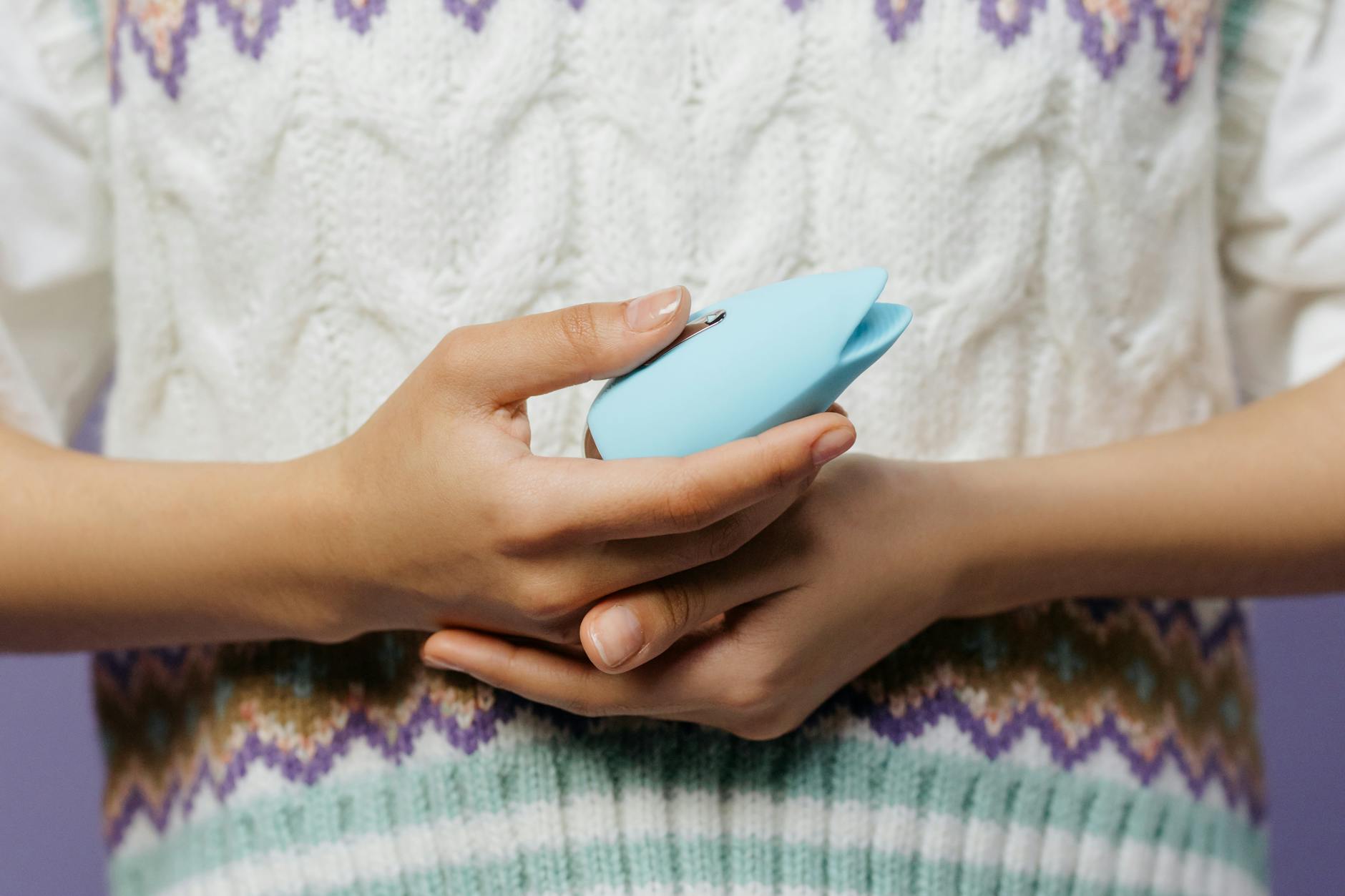
Here's the thing about numbness
Disconnection from pleasure isn't a character flaw. It's not broken wiring. It's your nervous system doing exactly what it was designed to do: protecting you when things feel unsafe, overwhelming, or just too much.
I see this constantly in my practice. Someone comes in and says, "I don't feel anything down there anymore," or "I used to love this and now it's like touching my arm." The first thing I ask isn't "what's wrong with you?" It's "what happened before this started?"
Often the answer is stress, burnout, grief, relationship disconnection, medication changes, or just years of moving through life on autopilot. Your body isn't broken. It's checked out because somewhere along the way, checking out felt safer than staying present.
Why numbness happens (and why a lemon vibrator actually helps)
Numbness has three common roots. First, psychological: when you're anxious, depressed, or carrying unprocessed stress, your brain literally dampens sensation. It's a survival mechanism. Second, relational: if you've spent years having sex that wasn't for you, or with someone you've grown distant from, your body learns to disconnect. Third, physiological: medications, hormonal changes, or even just aging can reduce tissue sensitivity.
A lemon clitoral vibrator works because it bypasses the part of you that's learned to tune out. Instead of relying on your hand, your partner's touch, or your own fading arousal cues, the vibrator creates a pattern of stimulation that your nervous system can't ignore. It's not about force. It's about consistency and precision.
The suction pattern on tools like the Lem doesn't feel like anything else your body has experienced. That novelty alone can wake up nerve endings that have gone dormant. Think of it as sensory reset button.
Start with exploration, not expectation
If you're numb, the worst thing you can do is put pressure on yourself to "succeed" at pleasure. That pressure is exactly what created the numbness in the first place.
Instead, approach your first few sessions as pure exploration. Set aside 20 to 30 minutes when you're alone and not tired. Turn off your phone. Create a space that feels safe and private. You're not trying to orgasm. You're not trying to feel "normal." You're just noticing what a lemon vibrator feels like against your body.
Start with the device off. Hold it. Feel the weight. Understand that this is a tool you're in control of, not something being done to you. Then, apply it to your outer labia first. Get comfortable with the sensation before you bring it to your clitoris. Many people rush this step and it's a mistake. Your clitoris is sensitive, and if you've been numb, it might feel almost uncomfortable at full intensity.
The pattern-shifting protocol
Here's the step-by-step approach I recommend:
Session one: Outside only. Turn the device to pattern one (the lowest, most basic pulse). Spend 10 minutes on your outer labia and the area around your clitoris. You're not looking for sensation yet. You're just introducing your body to the stimulation. Stop before you feel frustrated.
Session two: Gentle approach. Same pattern, same intensity, but now move toward the clitoral area. Spend 5 minutes on the outer labia, then 5 minutes on the clitoris itself. If anything feels numb or muted, that's fine. You're building the pathway back.
Session three and beyond: Intensity exploration. Once you've done this twice, you can start moving through patterns. Stay on pattern two for a full session before moving to pattern three. Your nervous system needs time to recalibrate. Rushing this feels like impatience but actually recreates the numbness.
The reason this works is that you're teaching your body to stay present with gradually increasing sensation, rather than jumping straight to what "should" feel good. You're essentially rewiring the connection between your clitoris and your brain.
When nothing is happening yet
Days three and four are often when people panic. "I still don't feel anything. This doesn't work for me." Hold on.
Numbness didn't develop overnight, and it won't disappear overnight either. What you're likely to notice first isn't pleasure. It's curiosity. A slight tingling. A faint awareness that something is happening. That's the signal. That's your nervous system waking up.
If you genuinely feel nothing after five or six sessions across two weeks, there might be something else at play. Certain medications, particularly SSRIs, can cause sexual numbness that requires a doctor's attention. Diabetes and some autoimmune conditions do the same. If you're on new medication, it's worth a conversation with your prescriber. But for most people, the sensation starts returning within 7 to 10 days of consistent use.
The mental piece matters as much as the physical
Here's what I find most people don't talk about: reconnecting with pleasure requires you to also reconnect with yourself. If the numbness came from disconnection in a relationship, you can't vibrate your way out of that. You have to actually look at it.
That might mean talking to your partner about what's shifted in your life or your connection. It might mean working with someone like me to understand what you're avoiding. It might mean admitting that you're burnt out and your body is responding to that exhaustion. None of that happens while you're holding a vibrator, but all of it affects whether a lemon vibrator actually helps.
What I tell my clients is this: use the device as permission to be curious about your body again. Use it as evidence that you deserve pleasure, even when you don't feel it yet. Use it as a reason to carve out 20 minutes that belong entirely to you.
Rebuilding with a partner
If you're in a relationship and you've been numb, there's often shame or distance attached to that. Your partner might feel rejected. You might feel broken. Neither of those things is true, but they're real feelings.
The most useful thing to do is separate the sensation work from the partnership. When you're rebuilding feeling on your own with a lemon clitoral vibrator, that's yours. It's your nervous system, your pace, your timeline. Once you start feeling something again, then you can decide what that means for partnered sex.
Many people find that once they rebuild sensation alone, they naturally want to include their partner. Others find they need to rebuild intimacy and trust first. Both paths are fine. The device isn't replacing your partner. It's helping your body remember how to be alive.
Lube and timing are your secret weapons
One thing people skip: even if you're numb, use lube. Water-based is fine. It reduces friction and makes the experience more comfortable, which means your body stays present longer instead of bracing against discomfort.
Timing matters too. Don't start this when you're exhausted at 11 p.m. or stressed before a work meeting. Pick a time when you have at least a little mental space. Your nervous system needs permission to shift gears, and that's hard to give yourself if you're running on fumes.
When to seek additional support
If after three weeks of consistent use you're still feeling completely numb, or if the numbness is accompanied by pain, it's worth seeing a pelvic floor physical therapist or a therapist who specializes in sexual health. Numbness can sometimes signal tension in the pelvic floor that needs professional attention. It can also be a sign of deeper trauma or dissociation that a vibrator alone won't address.
That's not failure. That's just knowing when to bring in help.
FAQ
How long does it actually take to feel sensation again?
Most people report noticing something within five to ten days of consistent use, two to three times per week. Full reconnection to pleasure usually takes four to six weeks. Everyone's timeline is different, but consistent, pressure-free exploration usually shifts things faster than sporadic or goal-oriented attempts.
Can I use a lemon vibrator if I feel completely numb?
Yes, absolutely. In fact, that's exactly when it's most useful. Numbness is often a sign that your nervous system needs input it can't ignore. A clitoral vibrator provides that in a way that hands or other methods sometimes can't.
What if my partner wants to help me rebuild sensation?
That's sweet, but start alone first. Your body needs to learn to respond without performance pressure. Once you've rebuilt some basic sensation, your partner can be involved, but the initial rewiring works better solo.
Is numbness a sign that something is medically wrong?
Not always. Numbness is often stress, disconnection, or medication-related. But if it showed up suddenly, or if it's accompanied by pain or other symptoms, mention it to your doctor. Some conditions do cause sexual numbness, and they're treatable.
Should I use the highest intensity right away to force sensation back?
No. High intensity on numb tissue often feels unpleasant rather than pleasurable, which teaches your body to stay disconnected. Start low, go slow, and let your nervous system gradually recalibrate. Patience actually works faster.
What if I'm on antidepressants and feeling numb?
Many SSRIs do cause sexual side effects. Talk to your prescriber about timing, dosage adjustments, or switching medications. In the meantime, a lemon vibrator can still help some people re-establish sensation, though you might need lower intensity and longer warm-up time than someone not on medication.
The path back to feeling
Numbness tells a story about what's been happening in your life and your body. Reconnecting with pleasure is partly about sensation, but mostly it's about permission. Permission to feel. Permission to take time for yourself. Permission to use tools that help.
A lemon vibrator is that tool. It's designed to create sensation you can't ignore, at a pace your nervous system can handle. You're not trying to feel "normal" again. You're building something new. And that's where the real pleasure lives.
If you want to talk through what's keeping you disconnected, or if you need support rebuilding intimacy with a partner, reach out. That's what I'm here for.