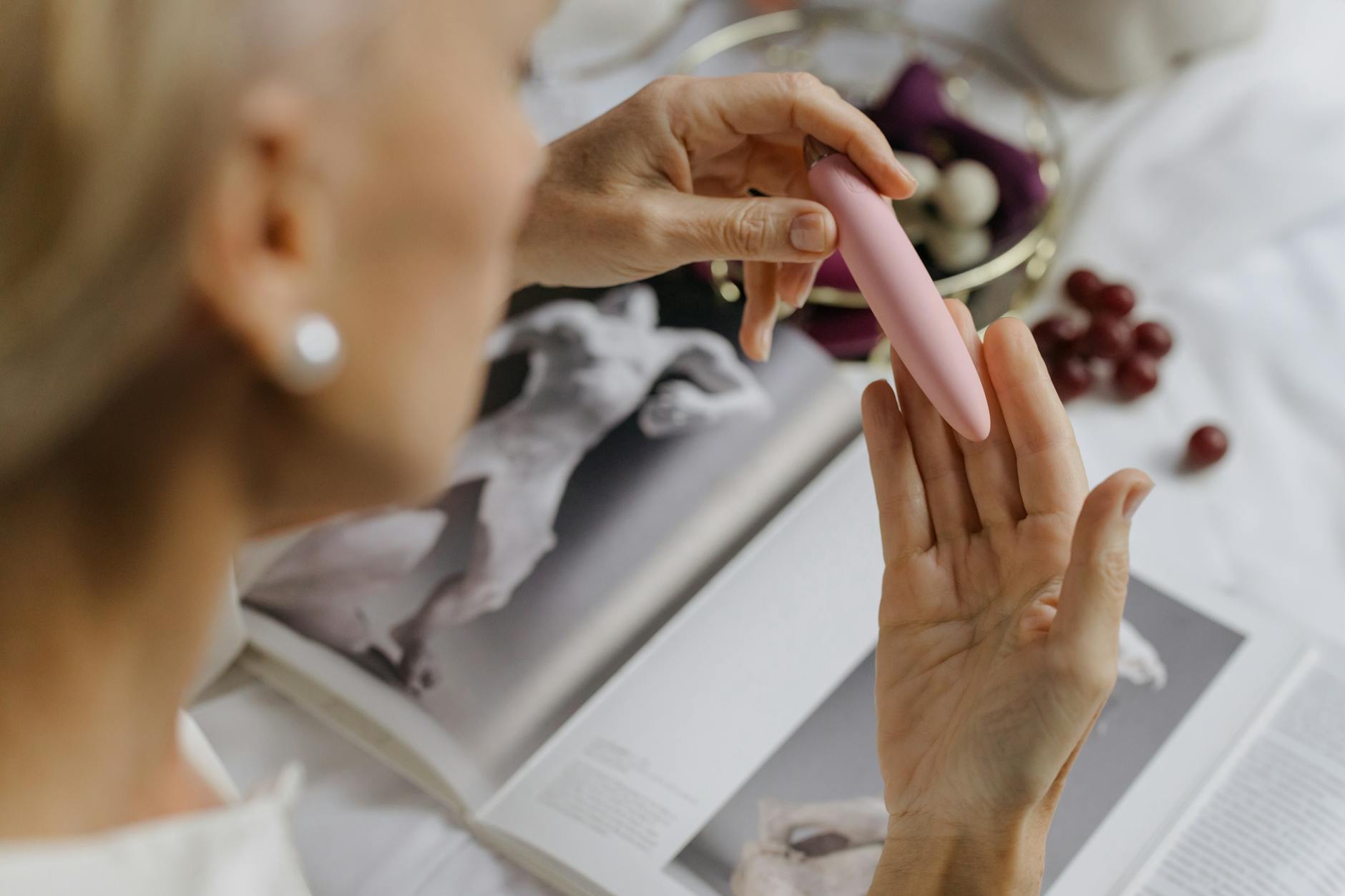
Let's be real about what happens to intimacy after illness or surgery
Your partner spent weeks driving you to appointments. They held your hand during scans. They helped you shower and change bandages. And somewhere between the catheter removal and the first time you felt strong enough to stand for ten minutes, intimacy became the most loaded word in your house.
It's not that you stopped loving each other. It's that your body stopped feeling like your own, and your partner stopped feeling like the person who could touch it. That's completely normal. And it's also completely changeable.
Why reconnecting after physical recovery is harder than it sounds
Physical healing and emotional intimacy operate on wildly different timelines. Your surgeon cleared you for activity weeks ago. Your body still feels like it's saying no.
Here's what's actually happening. During illness or recovery, your nervous system has been in survival mode. Your partner became your caregiver first and everything else second. Scar tissue, medication changes, fatigue, and fear of pain have rewired how you experience touch. And if surgery or illness involved your genitals or hormones, the physical sensation piece just got exponentially more complicated.
Most couples try to jump straight back to what they had before. Which never works, because you're not the same people anymore. The person you were before recovery no longer exists.
Starting with conversation, not touch
I know this sounds backward when what you actually want is to reconnect physically. But the fastest way back to pleasure is through clarity.
Before you bring the Lem into the bedroom, have the three conversations your nervous system actually needs:
First: "What am I afraid of?" Say it out loud to your partner. Pain? Re-injury? That your body isn't attractive anymore? That you've forgotten how to want them? All of the above? Your partner is probably carrying their own list. Hearing it breaks the isolation.
Second: "What does my body actually need right now?" Not what you think you should want or what worked before. Right now. Are you fatigued? Numb in certain areas? Tender? Hypersensitive? Scared of specific sensations? This is crucial information for both of you.
Third: "What does reconnection look like for us?" It might not be penetrative sex. It might not even be genital touch for a while. It might be holding hands for five minutes without anyone asking when sex is coming back. Permission to move slowly is the most valuable thing you can give each other right now.
Why a lemon clitoral vibrator changes the reconnection equation
When you're coming back from surgery or illness, you need a tool that doesn't require trust in your body yet. Penetrative sex asks a lot of questions. A lemon vibrator asks almost none.
The Lem's suction design means you can control intensity precisely. No thrusting, no pressure on scar tissue, no guesswork. You know exactly how much sensation you're getting at any second. For someone whose body has felt out of control, that agency is everything.
If there's numbness from surgery or nerve damage, the Lem's pulsing patterns can actually wake up those nerves more efficiently than traditional vibration. You're not just stimulating. You're reintroducing your body to sensation on its own timeline.
And here's the part that changes the couple dynamic: using a lemon vibrator together is a conversation. Your partner can hold it. You can guide them. You can say "softer" or "that exact spot, yes" without shame. You're literally teaching each other how your body works now, and that shared learning rebuilds intimacy in a way traditional sex can't right now.
The physical protocol that actually works
Start in a position where you feel safe. Not in bed if the bed became "sick person's territory" during recovery. Not in the dark if darkness feels isolating. Choose somewhere neutral. Your partner on your left side, you half-reclined, skin visible but not fully exposed yet.
Spend ten minutes on touch that has nothing to do with the Lem. Hands on your arm. Your back. Your neck. Your partner relearning your body as something to be curious about, not to fix.
When you're ready, introduce the vibrator at the lowest setting. Not on yourself yet. Let your partner hold it and trace the outer area first. Labia majora, inner thigh, the spaces around your genitals where sensation might be easier. You're warming your nervous system up.
Move to direct contact only when you ask for it. Pattern one or two. No rush to intensity. If something feels tender or wrong, pause immediately. Your partner's job is to listen, not to optimize.
The entire session should last 15-25 minutes. You're not chasing an orgasm. You're proving to yourself and your partner that pleasure is still possible in your new body. Some days that's exactly what happens. Some days it's just sensation without climax, and that's completely fine.
What to do when fear shows up mid-session
And it will. You'll be in the middle of something that feels good, and suddenly your brain will remember pain or fear or the feeling of your body betraying you.
Stop. Not because something's wrong, but because stopping is the most powerful thing you can do. Your partner pauses. You breathe. You name what just happened: "My nervous system just reminded me of being afraid." That's not failure. That's healing.
After a few seconds, you get to choose what comes next. Resume? Switch to non-sexual touch? End the session and just hold each other? There's no wrong answer. Giving yourself agency over what happens to your body is literally the antidote to the powerlessness of illness.
Why your partner's role matters more than you think
Your partner is dealing with their own version of this. They watched you struggle. They might be terrified of causing pain. They might feel rejected or resentful that things have changed. They might feel guilty for wanting sex when you were sick.
When you involve them in using the Lem with you, you're not just rebuilding intimacy. You're telling them that you still want them, that you trust them with your vulnerable body, and that sex isn't something you're doing at them. It's something you're doing together.
If they seem hesitant, ask why. Are they scared of hurting you? Do they feel out of place in this new dynamic? Do they need permission to feel desire again? Often the reconnection that matters most happens in those conversations, not in the physical act itself.
Managing the timeline without losing hope
Here's what I tell every couple in recovery: if you had significant illness or surgery, expect full emotional and physical healing to take 6-12 months. Not because your body is broken, but because your nervous system needs time to trust that safety has returned.
So build milestones that aren't about sex. First time you initiate touch. First time you guide your partner's hand without asking permission first. First time you laugh together in bed without it feeling weird. First time you use the Lem and actually enjoy it instead of evaluating yourself. These moments matter more than whatever the calendar says you should be doing.
Some couples find that reconnecting after health challenges actually deepens their intimacy more than it was before. Not because the sex is better, but because they learned to ask for what they need and to give their partner the truth instead of performing.
FAQ
How long after surgery can I actually use a lemon vibrator?
That depends entirely on the surgery and your doctor's clearance. General rule: if you've been cleared for sexual activity, you can use a Lem vibrator. But "cleared" and "ready" are different things. Your body might not feel ready for weeks or months after medical approval. That's okay. The vibrator will be there when you are.
What if I don't feel anything when we try?
Numbness or diminished sensation after surgery is common and usually temporary. Your nervous system is recalibrating. Start at the lowest pattern settings and use longer sessions rather than intense ones. Five minutes on pattern one every few days might wake up sensation better than 20 minutes on pattern five. And talk to your partner about it. Sometimes just naming that you're not feeling much takes the pressure off.
Can we use a lemon vibrator if my partner is also struggling with what happened?
Absolutely. In fact, many couples find that using a vibrator together is easier emotionally than trying to have traditional sex when both of you are carrying trauma around the illness. It's lower pressure, you're focused on sensation rather than performance, and it gives you both permission to move slowly. Consider having one of those three conversations I mentioned before you try, though. Your partner's fears matter too.
Should we tell our therapist we're using a vibrator during recovery?
If you have a therapist, yes. A good therapist understands that sexual health is part of overall healing. Your doctor or physical therapist should know as well if you have specific scar tissue or movement restrictions. Nobody's going to judge you. They just need to know so they can give you accurate guidance.
What if my partner feels awkward about the Lem at first?
That's incredibly common. Lots of people feel weird holding a vibrator on their partner the first few times. It can feel like admitting your body isn't enough, which is a shame response, not a reality. Have that conversation. "Using this doesn't mean I want you less. It means I want us to move slowly and together." Usually, once a partner realizes the vibrator is a tool for reconnection rather than a replacement, the awkwardness shifts.
How do I know if we're healing too slowly?
If six months have passed and you're still having zero physical intimacy, or if sex is causing ongoing pain, that's worth talking to a sex therapist or your doctor about. But "slow" isn't the same as "stuck." Slow is 10 minutes of touch once a week. Slow is using the Lem once a month instead of weekly. Slow is progress. Stuck is not progressing at all.
The thing nobody tells you about reconnecting after health challenges
Your relationship before illness was one thing. Your relationship after is something else entirely. You've both been broken open. You've both had to ask for help and admit fear. That vulnerability, if you let it, becomes the foundation for something deeper than what existed before.
Using a lemon vibrator during recovery isn't about getting back to normal. It's about building something new together. The intimacy you create now won't look like the intimacy you had. It will look like two people who chose each other anyway, even when everything got hard.
If you want to start small and talk through what reconnecting might look like for your situation, reach out at any time. That's what we're here for.