
The mismatch nobody talks about
Here's what happens: your partner's aroused and ready. You're not. They want to move forward. You need more time. And suddenly what should feel like connection feels like a negotiation, or worse, like you're holding them back.
This is one of the most common friction points in long-term partnerships, and it's almost never about desire. It's about pacing.
Why the timeline gap exists
Bodie's don't work on the same clock. Research on arousal patterns shows that people with vulvas typically need 15 to 25 minutes to reach peak arousal, while partners may be ready in 5 to 10. That's not a flaw in either person. It's just biology.
Add in the fact that many people feel a little guilty asking for more foreplay (or feel like they're making their partner wait), and what you get is rushed sex where nobody's actually satisfied. Your partner feels rejected when you ask for more time. You feel pressured or obligated. A lemon clitoral vibrator solves this dynamic entirely because it compresses the timeline without requiring your partner to do anything differently.
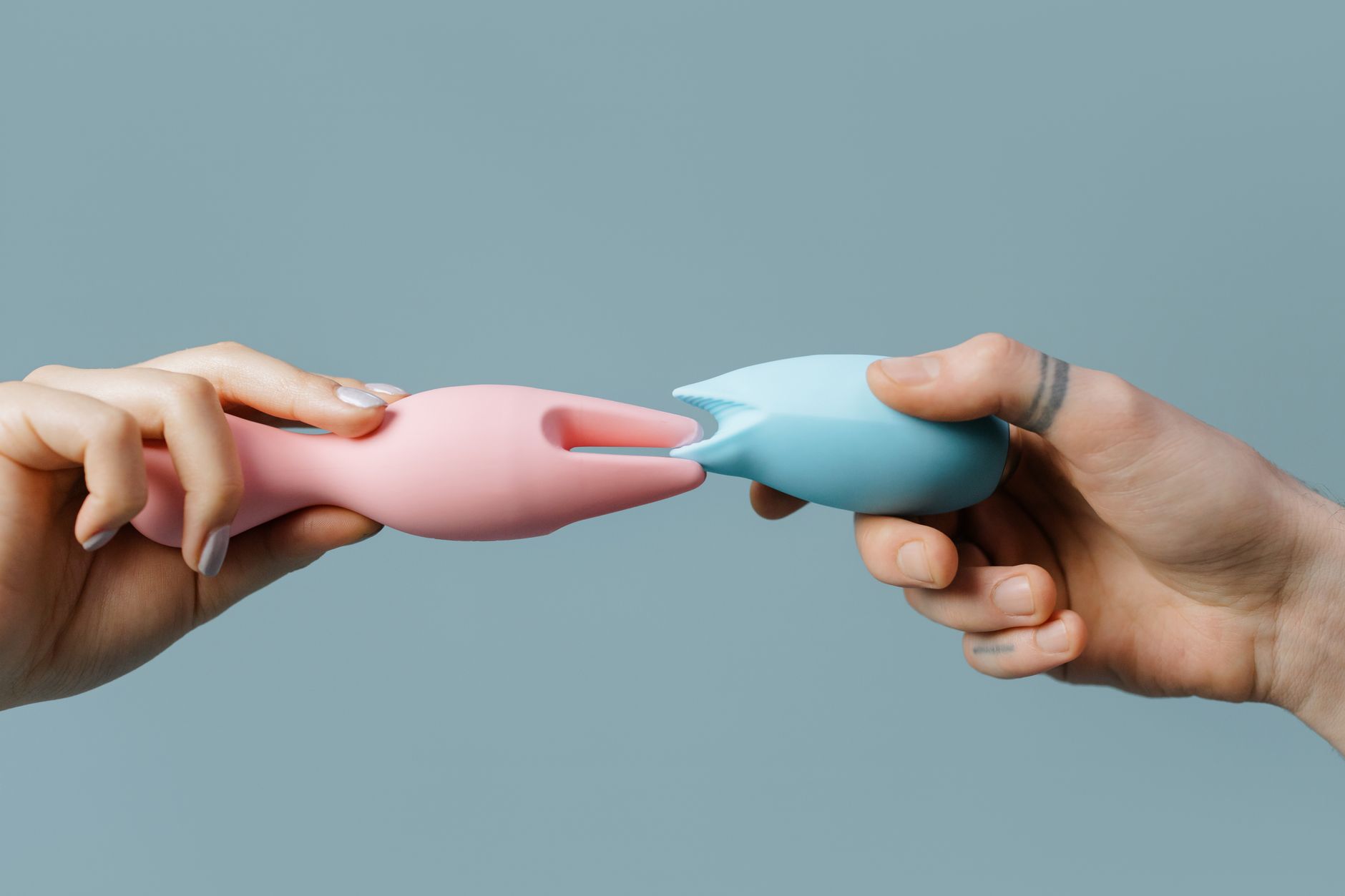
Photo by cottonbro studio on Pexels
How it actually bridges the gap
When your partner's touching you and you need more direct stimulation to catch up, a vibrator doesn't replace them. It supplements. They're still present, still engaged, still intimate. You're just getting the precise clitoral stimulation your body needs to match their arousal level.
The key is using it early and openly, not as a last resort. The moment you feel that mismatch starting, that's when you reach for the vibrator. Not 15 minutes later when resentment's already starting to build.
A lemon vibrator is particularly good for this because it's small, responsive, and works at speed. You're not hunting around trying to get comfortable. You're getting targeted stimulation immediately.
The conversation before it happens
This is the part most couples skip, and it's the part that matters most. You need to have this talk when you're both clothed and calm, not in the moment when arousal and pressure are already high.
Here's what you actually need to say: "I want us to feel good together. Sometimes my body takes longer to wake up than yours does. That's not about you or how much I want you. It's just how I'm wired. I'd like to use a vibrator when that happens so we can both be on the same page. It's not instead of you. It's in addition to you."
Then show them what you mean. Let them hold it. Let them use it on you while you're together. Make it collaborative, not secret.
Using it during actual intimacy
Start before penetration, not during it. You're trying to catch up on arousal, which means you need 10 to 15 minutes of direct clitoral stimulation while your partner's kissing you, touching you, talking to you. They're still leading. You're just getting the sensation you need.
Start on a lower pattern. You know your body, but in the moment with a partner it's different. You might feel more sensitive or need a different rhythm than you do alone. Give yourself permission to adjust.
Your partner should understand that this isn't a performance issue on their part. It's not about them not being enough. Explain it this way: "My body's like a dimmer switch. I need time to get bright. You help, but I also need direct stimulation to move faster."
What changes about the sex itself
Once you're both aroused and on the same timeline, the vibrator can stay involved or not. Some people use it throughout. Others put it down once they've caught up. There's no rule here.
What usually happens is that your partner feels less pressure to wait (because you're not making them wait, you're helping yourself get ready), and you feel less resentful (because your body's actually being taken care of). That shift alone changes the energy of what comes next.
If you're using a lemon sexual toy throughout penetration, keep it against your clitoris. Your partner might ask if they can hold it for you, or control the pattern. Some couples find that intimacy deepens when the partner gets to participate in the stimulation directly. It removes the feeling that the vibrator is replacing them.
The rhythm that actually works
Lower patterns for longer beats higher patterns for shorter. When you're trying to build arousal from lower baseline, 5 minutes on pattern 3 will get you further than 2 minutes on pattern 7. Your nervous system needs time to ramp up.
Many people intuitively skip to the highest patterns because they think that's faster. It usually isn't. It's more likely to overstimulate and actually slow arousal down. Think of it like warming up before exercise. You don't sprint at the start. You build into it.
When your partner resists the idea
Some partners interpret the vibrator as evidence that they're not enough. This is worth taking seriously because it's usually not about the vibrator. It's about a deeper worry about their place in your pleasure.
The reframe that works: "I want more of you, not less. I want you present while I'm getting ready so we start at the same place together."
If your partner still struggles, that's worth exploring. Sometimes it's insecurity. Sometimes it's a different belief about what pleasure should look like. A couples conversation with someone trained in sex-positive relationship dynamics can help. Your pleasure matters as much as theirs does.
Real timeline expectations
Using a lemon clitoral vibrator doesn't turn 25 minutes into 5. That's not realistic. What it does is compress it to 10 to 15 minutes and make it feel collaborative instead of like someone's waiting or someone's forcing themselves.
That matters for the relationship, not just for the sex. When both people feel their needs are being considered, when there's no guilt or pressure, the whole thing feels different. Better.
The longer conversation this opens
Once you've crossed this bridge once, you've given yourself permission to keep talking about what you actually need. Maybe it's not just timing. Maybe it's pressure, or rhythm, or presence, or something else entirely.
A vibrator is a tool that says "let's solve this together." It's not the solution to everything. But for the specific problem of mismatched arousal timelines, it's one of the most effective tools available. And unlike asking for more foreplay and hoping your partner will guess what you need, it's direct and immediate.
FAQ: Lemon Vibrators and Partner Dynamics
What if my partner feels threatened by the vibrator?
Start by separating the vibrator from the issue. The real issue is timeline, not adequacy. Try this: "I want to feel amazing with you. My body just works differently than yours. This helps us start together." If resistance continues, couples therapy focused on sexual health can help both of you feel more secure.
Can I use a lemon vibrator if I have a lower libido than my partner?
Absolutely. Lower libido doesn't mean you don't want intimacy. Often it means your desire builds slower or needs different context. A vibrator can help you access arousal faster without forcing anything. It removes pressure on both sides.
Is it better to use the vibrator before or during?
Before is usually easier when you're first starting out. You get comfortable with it, you reach peak arousal, and then you move into what comes next. As you get more confident, you can experiment with using it throughout. Neither is wrong.
How do I know which pattern to use when my partner's there?
Start low and go up. Pay attention to your breathing and body. If you're relaxing into it and feeling pleasure building, you're on the right pattern. If you're tensing up or it feels uncomfortable, go down one level.
What if the vibrator makes it harder to focus on my partner?
That usually means you're using it too early or at the wrong intensity. You want the vibrator to complement your partner's presence, not replace it. Keep your eyes on them. Keep touching them. Use your words. The vibrator's just helping your body catch up.
Does using a vibrator mean something's wrong with our sex life?
No. Using a vibrator means you're willing to solve problems creatively instead of suffering through them. That's actually a sign of a healthy partnership. It says you value both people's pleasure equally.
The shift that happens after
Most couples tell me the same thing once they've integrated a vibrator into their intimate life: the pressure goes away. There's no more negotiation happening silently under the surface. There's just two people who want each other, working together to get there at the same time.
That changes everything about how the rest feels. Not because the vibrator's magic. Because you've both agreed that your pleasure matters. All of it. And that you're willing to talk about it directly instead of just hoping things work out.