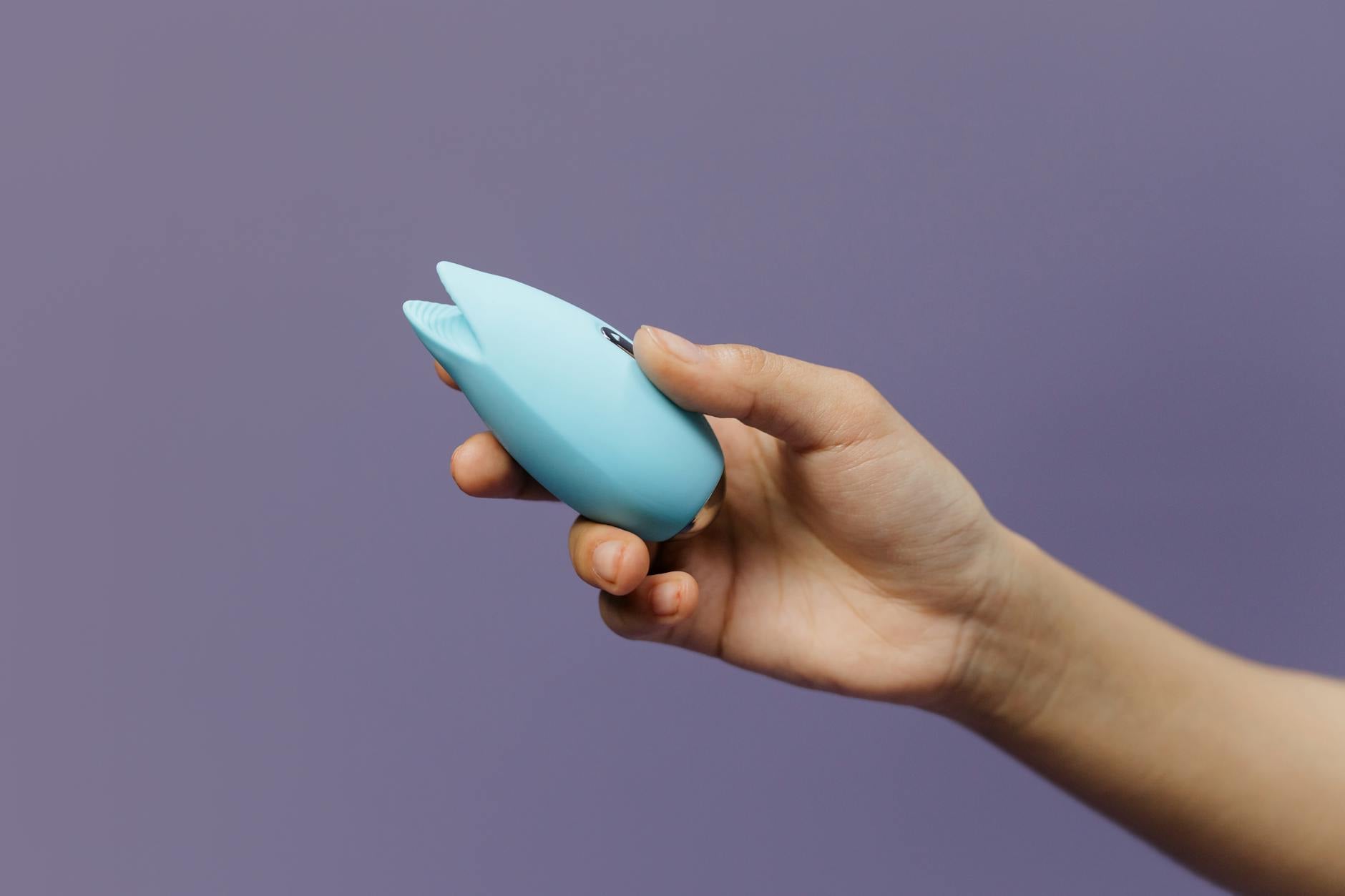
Let's talk about the mismatch nobody mentions
Age-gap relationships come with real physiological differences. A partner five, ten, or twenty years younger often has a faster arousal response. The older partner typically needs more time and specific stimulation. Neither is wrong. Both are normal. But when you're trying to sync up with someone whose body works on a different clock, the friction becomes a real problem.
I've worked with countless couples where the younger partner finishes warming up right as the older partner is just getting started. Or the reverse. The shame creeps in fast. One person feels too slow. The other feels rushed. A lemon vibrator doesn't fix the age gap, but it removes the pressure that comes with it.
How arousal actually works across different bodies and ages
Younger bodies often have faster vasocongestion. Blood rushes to the genitals more quickly. Orgasms can arrive within minutes of stimulation beginning. Around age 40 and beyond, arousal typically takes longer but often feels deeper and more complex once it arrives. This isn't a deficit. It's a different trajectory.
Hormone levels also shift with age. Testosterone, which fuels desire in everyone regardless of anatomy, drops gradually over time. Estrogen changes too. All of this means that a 32-year-old and a 52-year-old in the same bed aren't just emotionally on different pages. Their bodies literally respond at different speeds.
The problem gets worse when partners try to force synchronization. One person feels they have to slow down. The other feels they have to speed up. Both strategies kill pleasure because both require self-editing. You can't focus on sensation when you're managing someone else's timeline.
Why pressure kills arousal, even in age-gap relationships
I see this pattern constantly in couples with significant age differences. The younger partner, wanting to please, holds back their natural response. The older partner, feeling self-conscious about their slower arousal, pushes themselves harder than their body actually wants. Neither person gets what they actually need.
Add a cultural layer here. Society is weirdly okay with judging age-gap relationships. That judgment creeps into the bedroom as doubt. The older partner wonders if they're still desirable. The younger partner wonders if they're being patient enough. That mental static is loud. It drowns out sensation.
This is where a lemon vibrator changes everything. It depersonalizes the gap. You're not waiting for each other anymore. You're both working with a tool. One person uses the vibrator while the other builds arousal their own way. Nobody's waiting. Nobody's rushing.
The practical setup that actually works
Here's what I recommend to couples navigating this dynamic:
Start the session with separate arousal time. Yes, together in the same room, but each person focusing on their own body. The younger partner might use their hands or a vibrator right away. The older partner might start with touch, conversation, or a slower warm-up. No obligation to be at the same place. No performance pressure. Just building arousal independently.
After fifteen to twenty minutes, bring the clitoral vibrator into the mix. The person whose arousal naturally peaks first uses it while their partner continues whatever rhythm works for them. A lemon vibrator's air-suction technology is perfect here because it doesn't require partner involvement. You can use it solo while your partner touches you, kisses you, or enters you without any coordination.
The beauty is that when arousal is independent, you can actually enjoy the moments when you sync up naturally. There's less pressure. More presence. More actual pleasure.
When to introduce the vibrator in the session
Timing matters. Don't start with the lemon vibrator as a fix or a rescue tool. That framing makes it feel like a problem-solver, and it becomes a reminder that something's wrong. Instead, introduce it early and casually. Make it part of your normal toolkit, like lube or a pillow.
Some couples do best bringing it in after about ten minutes of touch. Others prefer to introduce it right from the start so there's zero assumption about "when the real sex begins." Experiment. What matters is that using it feels as natural as anything else you do together.
If you're the older partner, using a lemon vibrator doesn't mean your partner gets to check out. They're still touching you, still present, still engaged. The vibrator just gives your clitoris something specific to focus on while you're receiving other stimulation. Your partner might be inside you, kissing your neck, talking to you. The vibrator handles one job. They handle the connection.
If you're the younger partner, using it while your older partner builds arousal at their pace removes the guilt of getting there first. You're not waiting. You're both actively pleasuring yourself. That's not selfish. That's partnership.
The conversation before you try it
Don't surprise your partner with a lemon vibrator in the moment. Talk about it first, and frame it as something that could work for both of you, not as a fix for one person's problem.
You might say something like: "I've been thinking about how our bodies work on different timelines, and I realized that's actually kind of hot. What if we tried using a vibrator so we're both getting what we need instead of one of us waiting?" Keep it matter-of-fact. Remove shame from the conversation.
Mention what appeals to you specifically. Maybe it's the fact that it frees you up to focus on touch instead of worrying about timing. Maybe it's that you get to see your partner in pleasure without feeling responsible for delivering every sensation. Maybe it's just curiosity. Be honest.
Listen to their response without defending. If they have hesitation, ask what it is. Is it about feeling replaced? About not knowing how to use it? About cultural messaging they absorbed? Those are all solvable. But you have to know what the actual concern is first.
The bigger picture: age gaps don't mean incompatibility
Physiology is just one part of this puzzle. Yes, bodies age differently. But desire, interest, and pleasure don't have an expiration date. Some of my most connected couples are age-gap couples because they've done the work to acknowledge differences and adapt rather than pretend they don't exist.
A clitoral vibrator like the lem is a tool for that adaptation. It's not a band-aid. It's not admitting defeat. It's saying: our bodies work differently, and that's okay. Let's use what actually works instead of performing for each other.
When you remove the pressure to sync up, something interesting happens. The age gap becomes less loaded. You stop seeing it as a problem to solve and start seeing it as just a fact about who you are together. That mental shift alone changes everything about how sex feels.
FAQ
Can a lemon clitoral vibrator work for both people in an age-gap relationship?
Absolutely. Many couples own more than one or take turns. But even with one lem vibrator, the benefits are real. You're building independent arousal, which actually strengthens connection because there's no pressure. The person using it gets specific clitoral stimulation while their partner focuses on whatever they need. Everyone wins.
What if the older partner feels insecure about needing more time?
That's worth addressing directly, probably outside the bedroom first. The messaging we receive about aging and desire is brutal. Slower arousal doesn't mean less satisfying. Often it means more complex, more intense, more interesting. A therapist who specializes in sexuality can help reframe this. In the moment, a vibrator removes the stage of feeling slow. You're not comparing speed anymore. You're both just experiencing pleasure.
Does using a lemon vibrator mean my partner isn't attracted to me anymore?
No. In fact, couples who integrate toys report feeling more connected, not less. A vibrator doesn't replace your partner. It gives your clitoris something to do while your partner gives you other things. Touch, presence, attention. Those don't go away. They actually deepen because you're not both trying to solve the arousal puzzle at once.
How do I bring this up if my partner has never used a toy before?
Start with curiosity, not criticism. "I read something about how couples with different arousal speeds sometimes use toys to make things easier. I'm curious if that's something you'd want to try." Make it about your relationship, not about fixing them. If they're hesitant, ask why. Then listen. Sometimes it's about cultural background. Sometimes it's about past experiences. Sometimes it's just unfamiliarity. All of those are workable.
What if we try it and it feels awkward?
It probably will at first. New things are awkward. That doesn't mean it won't work. Give it three or four tries before deciding. Talk about what felt off. Was it the timing? The pressure? The actual sensation? Adjust. Maybe you need more lube. Maybe you need to introduce it differently. Maybe you need to talk more beforehand. Awkwardness is information, not failure.
Can age-gap relationships have good sex without toys?
Of course. But why make it harder than it needs to be? If different arousal speeds are a real issue in your relationship, acknowledging that and using a tool that helps is smart. It's not a magic fix. The real work is the conversation, the permission, the willingness to adapt. A lemon vibrator just makes that adaptation easier to execute.
The real work is showing up differently
Age gaps in relationships aren't inherently a problem. But they do come with logistical challenges that most couples don't talk about. Arousal timing is one of them. When you acknowledge it directly, you remove the shame. When you use tools that actually work, you remove the pressure. What's left is two people who want each other, building pleasure on their own timelines, together.
That's worth getting right. If you want to talk through how this might work for your specific relationship, reach out. I'm here to help.
Sources
American Association of Retired Persons. "Sexual Health and Age." Studies on aging and sexual response cycles across the lifespan.
Basson, R. (2000). "The Female Sexual Response: A Different Model." Journal of Sex & Marital Therapy. Research on arousal trajectory differences across age groups.
Gottman Institute. "Age Gaps and Relationship Dynamics." Clinical observations on couples with significant age differences navigating intimacy.