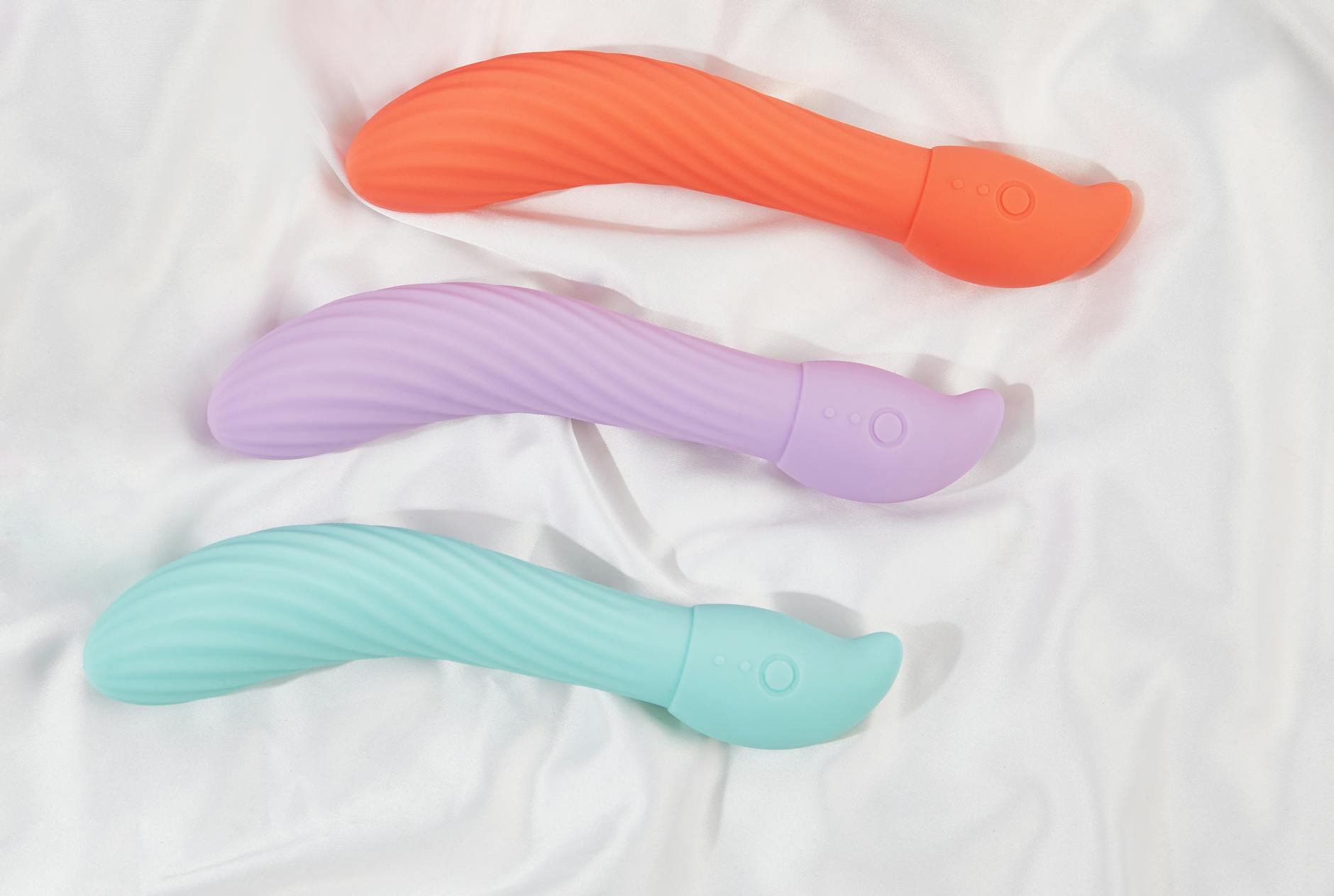
The part nobody talks about clearly
Menopause doesn't kill pleasure. It changes the equipment. Here's the honest distinction: hormonal shifts alter tissue thickness, lubrication speed, and arousal response. They do not erase your ability to orgasm, and they absolutely do not revoke your right to satisfaction.
Most of what you've heard falls into two camps. One says everything dries up and gets numb. The other insists it's totally fine, don't worry. Both are incomplete, and both miss the point: menopause is a transition that benefits from different tools and slightly different technique. A lemon clitoral vibrator, with its specific design, actually handles this transition remarkably well.
What actually shifts during menopause
Let's start with the physiology so you know what you're working with. Estrogen drops. This means vaginal and clitoral tissue gets thinner and less elastic. Blood flow slows, which delays arousal and can make orgasms feel subtly different. Testosterone also declines (yes, people with vulvas produce it), and that's a major driver of desire in everyone. The pelvic floor loses some of its estrogen-dependent support, which can change how intense orgasms feel.
But here's what doesn't change: the nerve endings in your clitoris stay intact. The brain's pleasure pathways remain open. The capacity for full-body sensation is still there.
Many people report that their most satisfying orgasms come after menopause. This isn't polite fiction. It's a genuine clinical observation I've seen repeatedly in my practice. The difference is that the path to get there shifts slightly.
Why lemon vibrators work particularly well now
A traditional vibrator relies on direct friction. After menopause, that can feel too intense on thinner tissue. It's not that you're broken; it's that the tissue texture has changed, and sustained, direct pressure sometimes triggers sensitivity rather than pleasure.
Lemon clitoral vibrators use suction and gentle pulsation instead of pure vibration. That distinction matters enormously right now. Suction stimulates the nerve-rich areas around and above the clitoris without the mechanical pressure of friction. It's gentler on delicate tissue while still delivering strong, focused sensation.
The Lem, for instance, works through rhythmic suction that feels more like a slow build than an aggressive buzz. For someone navigating menopause, that approach often feels more aligned with how arousal is actually happening in your body.
Reframe the warm-up timeline
One of the biggest shifts I see people miss is the timing. Before menopause, arousal might peak in five to ten minutes. During and after menopause, budget fifteen to twenty-five minutes. That's not a sign of dysfunction. It's just how blood flow works now.
Start with foreplay that you actually enjoy. Read something, listen to music, let your mind wander into what turns you on. Then introduce the lemon vibrator once you're already feeling something. Don't expect it to create arousal from zero. Use it to amplify arousal that's already present, even if it's subtle.
This shift actually creates space for better partnered sex, too. More time for connection, more opportunity to communicate what feels good. Rushing doesn't serve menopause bodies.
Lubrication is no longer optional
Water-based lubricant becomes essential, not optional. Thinner tissue benefits from the extra glide. You're not broken; you're just working with different biology. A quality water-based lube lets you use the lemon vibrator longer without any discomfort or irritation.
Apply lube generously. Don't be stingy. Reapply if things start to feel dry. The vibrator will work better, feel better, and your tissues will thank you.
Avoid silicone-based lubes if you're using silicone toys like the Lem. Silicone lube can degrade silicone toys over time. Stick to water-based, and you're fine.
Start at lower intensity, work up gradually
The Lem has multiple intensity settings for exactly this reason. During menopause, start at patterns one through three. Your tissues may be more sensitive to intensity now, and that's okay. You can always turn it up. You can't un-turn it up if you've overstimulated.
Many people find that lower intensities actually feel better during this phase anyway. The sensation spreads differently, feels more nuanced. Higher intensity sometimes feels blunt rather than pleasurable.
Give yourself permission to explore what actually feels good rather than what felt good before. Your body has changed. That's not a loss; it's new information.
Pelvic floor engagement and release matter more now
During menopause, the pelvic floor loses some estrogen-dependent tone. This affects how orgasms feel and your ability to sustain arousal. But here's the counterintuitive part: you don't just need to strengthen it. You also need to learn how to fully relax it.
Many people unconsciously clench their pelvic floor during pleasure. That works fine when estrogen is higher. During and after menopause, holding tension can actually prevent orgasm rather than intensify it.
Before you use the lemon vibrator, practice releasing your pelvic floor completely. Take a breath, consciously soften that area. Then use the vibrator. You might find that the combination creates a much deeper sensation than you expected.
If you want to strengthen it alongside release work, Kegel exercises still help. But make them part of a broader practice that includes relaxation and awareness.
Mental clarity is a massive advantage you're not using
Here's something nobody tells you about menopause: the cognitive load lifts. For decades, your brain was managing a cycling hormone system, fertility concerns, societal pressure around reproduction. After menopause, that mental space opens up.
That's not metaphorical. It's neurological. And it translates directly into better sex. When your brain is less occupied by hormonal noise, you can actually focus on sensation. You can be present with a partner or alone. That presence alone often creates better orgasms than anything physiological.
Use this. Before you use the lemon vibrator, spend a few minutes mentally clearing space. Not meditation, necessarily. Just: what am I actually wanting right now? What feels good? Give yourself permission to be fully there instead of half-monitoring your body's response.
When to see a specialist
If pain appears during sex, don't wait it out. Genitourinary syndrome of menopause (GSM) is real, treatable, and common. A menopause-informed GP or gynecologist can prescribe topical estrogen creams that have minimal systemic absorption and transform the experience in weeks.
If desire has completely disappeared and isn't returning even with better tools and more time, testosterone therapy is worth discussing with a doctor. It's available and often life-changing for the right person.
If the lemon vibrator consistently feels too intense even at the lowest setting, or if sensation is completely absent, a specialist can help determine if there's something specific going on beyond typical menopause changes.
The emotional terrain matters as much as the physical
Menopause often arrives alongside other midlife transitions. Kids leaving home. Career shifts. Relationship changes. Grief. The temptation is to blame everything on hormones. Sometimes that's accurate. Often, emotional stuff is wearing a hormonal disguise.
If you're partnered, separate the two conversations. "My body is responding differently" is different from "I want us to reconnect." Mixing them creates dead ends for both.
If you're single, menopause can actually feel like liberation. The pressure to perform or please someone else lifts. You get to explore what actually feels good on your terms. That's a real gift, even if it doesn't feel like one yet.
One more thing about pleasure after menopause
Menopause is not the end of your sexual life. It's the middle chapter, and in many ways, the most interesting one. You have decades of experience with your own body. You know what you want. You're less concerned with performance. You have fewer distractions and more clarity.
That's a setup for some of the best sex of your life. A lemon clitoral vibrator is just a tool. The real thing that changes is permission. Permission to take your time. Permission to use lubricant. Permission to let sensation build slowly. Permission to prioritize your own pleasure without apology.
Use the vibrator. Use the time. Use the mental space that's opened up. What's on the other side of menopause is often richer than what came before, if you're willing to meet it with honesty and the right information.
People also ask
Does a lemon vibrator feel different after menopause starts?
Yes and no. The vibrator itself hasn't changed. But how it interacts with your tissue has. During menopause, thinner vaginal and clitoral tissue responds differently to stimulation. Many people find that the suction design of a lemon clitoral vibrator actually feels more comfortable and effective than traditional vibrators during this phase because it doesn't rely on direct friction. The sensation might feel less intense at first, but using lower intensity settings and allowing more warm-up time often creates deeper, more satisfying pleasure.
Can I still use a lemon vibrator if I have low lubrication from menopause?
Absolutely. In fact, water-based lubricant becomes your best friend. Apply it generously before and during use. Quality lube actually makes the lemon vibrator work better because there's less friction and more glide. The suction mechanism of a clitoral vibrator doesn't require lubrication to function the way friction-based toys do, but lube makes the whole experience more comfortable and often more pleasurable. This is not a workaround; it's exactly how menopause-era pleasure is designed to work.
How long should warm-up take when using a lemon vibrator during menopause?
Budget at least fifteen to twenty-five minutes before introducing the vibrator. This isn't a sign of dysfunction; it's just how blood flow and arousal work during menopause. Start with whatever foreplay or mental engagement actually turns you on. Then use the vibrator once you're already feeling something. Lower intensity settings often feel better and allow for longer, more sustained pleasure. Rushing defeats the purpose.
Should I start at the lowest intensity setting on my lemon vibrator during menopause?
Yes. During menopause, tissue sensitivity can shift, and lower intensities often feel more pleasurable than higher ones. Start at pattern one or two on the Lem and work upward only if you want more. Many people discover that they actually prefer lower intensities now because the sensation feels more nuanced rather than blunt. You're not losing capacity; you're discovering what your body actually needs at this phase.
Can menopause pain go away with a lemon vibrator?
A lemon vibrator can feel wonderful during menopause and help with pleasure, but if you're experiencing pain during sex, that's a signal to see a menopause-informed healthcare provider. Genitourinary syndrome of menopause (GSM) is common and highly treatable with topical estrogen creams. Once pain is addressed, tools like a lemon clitoral vibrator become genuinely enjoyable. Don't push through pain; get support first.
Is it normal for sensation to feel muted during menopause?
Yes, and it's usually temporary or manageable. Thinner tissue and slower blood flow can create a sensation that feels more subtle or delayed. But this doesn't mean numbness or dysfunction. Many people find that with longer warm-up time, more lubrication, and tools like a lemon vibrator designed for gentler stimulation, sensation actually becomes richer and more varied. If sensation is completely absent even with these adjustments, talk to a specialist. For most people, menopause brings a shift in sensation, not a loss of it.
Sources
- "Genitourinary Syndrome of Menopause: New Terminology for Vulvovaginal Atrophy." Menopause: The Journal of The North American Menopause Society, 2015.
- "Menopause and Sexual Function." American College of Obstetricians and Gynecologists (ACOG) Clinical Guidelines.
- "The Physiology of Sexual Response in Postmenopausal Women." Journal of Sexual Medicine, 2012.
- Kingsberg, S. A., et al. "The Journal of Sexual Medicine on "Epidemiology of Menopausal Symptoms."" Journal of Sexual Medicine, 2017.