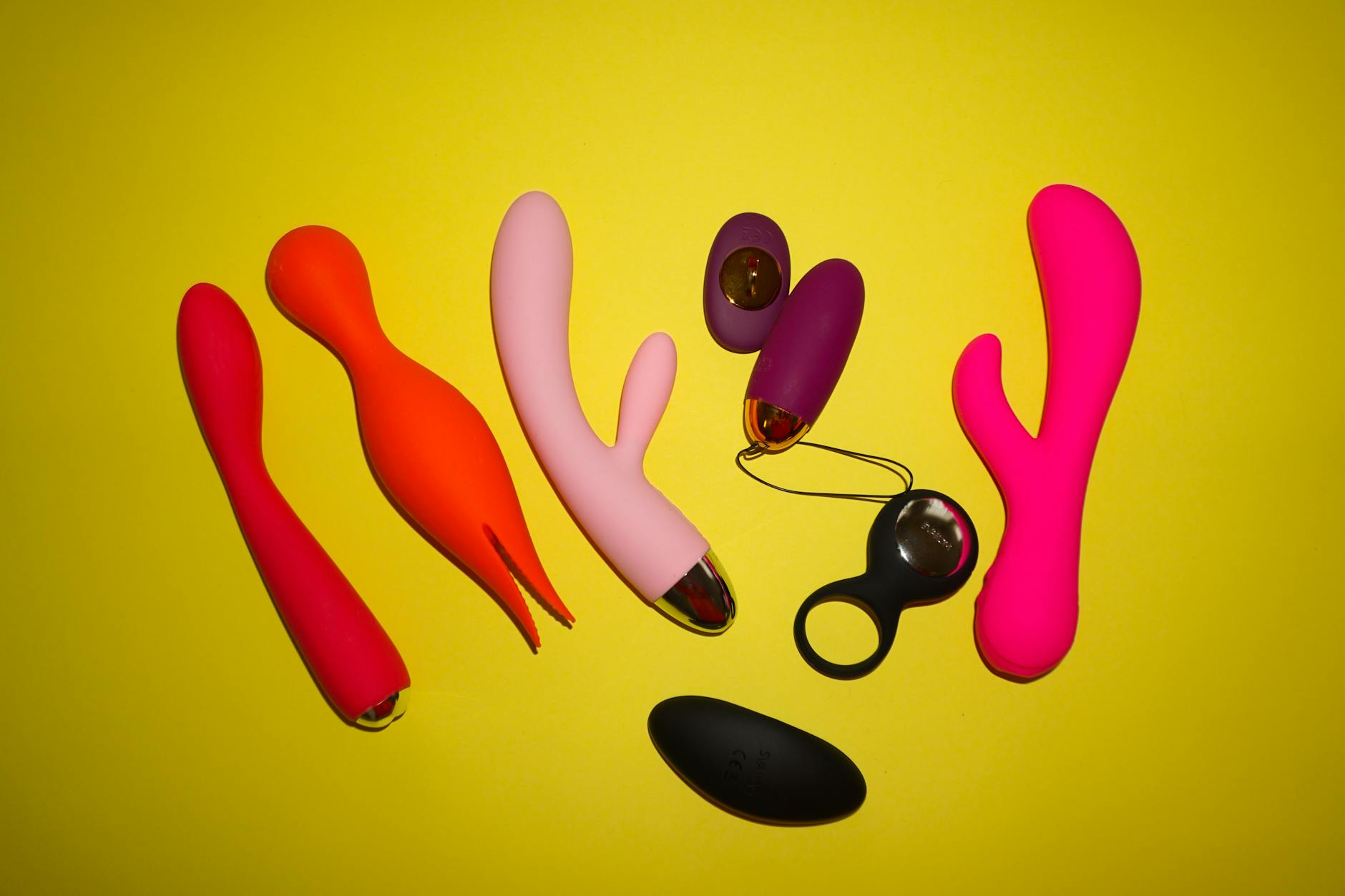
Let's address the elephant first
Your vulva changes after 40. The tissue thins. Lubrication shifts. The whole landscape feels different. And if you've been using a lemon vibrator or any clitoral vibrator the same way you did at 25, you're probably running into friction that feels wrong, or intensity that's suddenly too much, or a vague sense that your body isn't cooperating the way it used to.
Here's the thing: your body isn't broken. You're just using old settings in a new body. The fix is straightforward once you know what's actually happening.
Why tissue sensitivity changes after 40
Estrogen levels drop gradually as you move through your 40s and beyond. Estrogen keeps tissue plump, elastic, and lubricated. When it dips, the vulva becomes thinner, less stretchy, and more prone to irritation. This isn't disease. It's a normal biochemical shift that affects roughly 80 percent of people with vulvas by their mid-40s.
But here's what stays exactly the same: nerve density in the clitoris doesn't change. Your brain's capacity for pleasure doesn't change. The neural pathways that create sensation don't atrophy. What changes is the tissue surrounding those nerves. It becomes more sensitive, which sounds like a bad thing but often isn't. It just requires a different touch.
Many people find that a lemon clitoral vibrator works better post-40 than it did earlier, because air-suction technology (which Hello Nancy's lemon vibrator uses) doesn't rely on the direct friction that thinner tissue can't always tolerate.
Start with lubrication every time
Water-based lubricant isn't optional anymore. It's infrastructure.
Apply it generously around the outer labia and clitoris before you pick up the lemon vibrator. Don't assume your own lubrication will be enough. At 40+, arousal-related lubrication often takes longer to build, and it may be less abundant than it was. This isn't a sign of low desire. It's just biology.
Use a quality water-based lube (silicone-based lubes can degrade silicone toys, so skip those). I typically recommend lubes that include glycerin or hyaluronic acid, which mimic the skin's natural hydration better than basic water-based options.
Reapply mid-session if things start to feel dry. Lubrication isn't cheating. It's the equivalent of putting on glasses to read. You're not weaker for needing it. You're smarter for using it.
Warm up longer than you think you need to
Arousal takes time. Budget 15 to 20 minutes of foreplay or solo touch before you introduce the lemon vibrator itself.
Use your hands. Use your partner's hands. Build blood flow to the area. Engage mentally. Let your nervous system shift into parasympathetic (rest-and-pleasure) mode. Your clitoris will become more engorged, tissue will plump up slightly from increased circulation, and you'll be far more receptive to vibration.
Skipping this step almost always leads to the sensation feeling too intense or uncomfortable. People often blame the toy or their body. It's almost always the warm-up.
Start at the lowest intensity setting
If your lemon vibrator has pattern or intensity options, begin at the lowest setting. Not because you're fragile. Because with thinner tissue, lower intensity often feels more pleasurable than higher intensity.
Many people in their 40s and beyond report that the lowest or second-lowest setting on a device like the Lem delivers better results than the settings they used to prefer. The clitoral nerve density hasn't changed. Sensation just registers differently when there's less tissue buffering the stimulation.
Start low. Spend 2 to 3 minutes. You can always turn it up. You can't un-ring the bell if you've gone too hard.
Position matters more now
Thinner tissue means positioning the lemon vibrator slightly differently can make a massive difference in comfort.
Instead of applying direct downward pressure on the clitoris, angle it slightly to the side or to the upper labia. This distributes pressure across a wider area and typically feels less intense while remaining highly pleasurable. You'll get consistent stimulation without the sensation of being hammered in one precise spot.
Experiment with light contact versus firm contact. Many people over 40 find that barely touching the vibrator to the skin, letting the suction do the work without additional pressure, feels surprisingly intense and deeply satisfying. The air-suction mechanism in a lemon clitoral vibrator does the heavy lifting. Your hand just needs to hold it in place.
Incorporate breaks
If you've been using a clitoral vibrator continuously for 10 or 15 minutes, your nerve endings can become less responsive. Pleasure plateaus. Sometimes it stops registering altogether.
Build in micro-breaks. Use the vibrator for 5 minutes, then pause for 30 seconds while you breathe or kiss your partner or simply be still. Then come back. These breaks reset your nerve sensitivity and often lead to deeper, more sustained pleasure than pushing through numbness.
Check for irritation after
Take a look at your vulva 15 to 30 minutes after using the lemon vibrator. You're looking for redness, rawness, or any texture change. Mild pinking is normal. Significant irritation or any breakdown of skin isn't.
If irritation appears, ease off intensity or duration for your next session. Consider upgrading your lubricant to one with added soothing ingredients like aloe or chamomile. If irritation persists after adjusting technique, it might be worth checking in with a gynecologist to rule out genitourinary syndrome of menopause (GSM) or atrophic vulvovaginitis, both of which are highly treatable.
The partner conversation worth having
If you're using a lemon vibrator with a partner, the tissue sensitivity shift is a great opportunity to renegotiate what touch feels good. You might find that what worked for you at 30 doesn't work at 45, and that's not rejection of your partner. It's information.
Say it plainly: "My body feels different now. I want to explore what works best for me right now." From there, you might discover that your partner's touch paired with a lemon clitoral vibrator feels better than either alone. Or that the warm-up time you need now is an excuse to slow down and be present together. Frame it as evolution, not deficit.
Why the lemon vibrator wins after 40
Unlike traditional vibrators that use direct oscillation, the Hello Nancy lemon vibrator uses gentle suction that stimulates without friction. For people with sensitive tissue, this is often gentler while remaining highly effective. You get intense sensation without the mechanics that can cause irritation.
Air-suction technology is particularly forgiving for the tissue changes that come with age. It's one reason so many people over 40 report that clitoral vibrators work better than they ever have.
FAQ
How long should warm-up time be if I'm over 40?
Aim for 15 to 20 minutes of touch, mental engagement, or foreplay before introducing a lemon vibrator. This isn't rigid. Some days you'll want less, some days more. The signal is physical readiness: when the clitoris feels engorged and the area feels naturally lubricated, you're ready. If you're reaching for the vibrator and nothing feels aroused yet, add more time.
Can I still have intense sensations with a lemon clitoral vibrator after 40?
Absolutely. Intense and gentle aren't opposites. Many people find that because they're using lower intensity settings, sensation actually feels more focused and intense than the higher settings they used at younger ages. It's the difference between a bright flashlight and a laser pointer. One is louder, but the other cuts deeper.
What's the difference between water-based and silicone-based lube for lemon vibrators?
Water-based lubes are the safer choice for most silicone toys, including the lemon vibrator, because silicone lubes can degrade silicone over time. Water-based lubes also feel more like natural lubrication, which many people prefer. The trade-off is that water-based lubes dry out faster and may need reapplication mid-session. Silicone lubes feel slicker and last longer, but they're incompatible with silicone toys.
Is it normal for my clitoris to be more sensitive to vibration now?
Completely normal. Thinner tissue means the nerves are slightly less insulated, so vibration registers more intensely. This isn't a loss of function. It's a change in sensation. Many people experience it as more pleasurable, not less. If it feels uncomfortable, adjust intensity downward and adjust positioning slightly. You'll find a sweet spot that feels amazing.
Should I be concerned if I need longer to reach orgasm after 40?
Not at all. Longer arousal time is standard. Your nervous system may need more time to shift into pleasure mode, and that's fine. What matters is whether orgasm eventually arrives and whether the journey feels good. If you're not reaching orgasm even with extended sessions using a lemon clitoral vibrator, that might signal a need to talk with a healthcare provider about desire, hormones, or medications that could be affecting response.
Can I use a lemon vibrator if I have genitourinary syndrome of menopause?
Yes, but with care. GSM involves significant tissue thinning and sometimes painful intercourse. If you have GSM, start with topical estrogen cream prescribed by a gynecologist, which can restore tissue health in 2 to 4 weeks. Once tissue is healthier, a lemon vibrator often feels dramatically better. In the meantime, use gentle pressure, lots of lubrication, and the lowest intensity settings.
The bigger picture
Using a lemon vibrator after 40 with sensitive tissue isn't about lowering expectations. It's about matching your technique to your current body and discovering that pleasure often deepens when you slow down and pay attention.
Your body isn't losing capacity. It's shifting expression. The orgasms that come from this recalibrated approach are often the most satisfying you'll have. You just have to be willing to learn how.
If you're navigating this transition with a partner, the conversation is worth having. If you're exploring alone, the patience you bring to understanding your own body now is an investment that pays off for years.
Your pleasure matters at 40, at 50, and beyond. You deserve an approach that meets you where you actually are.