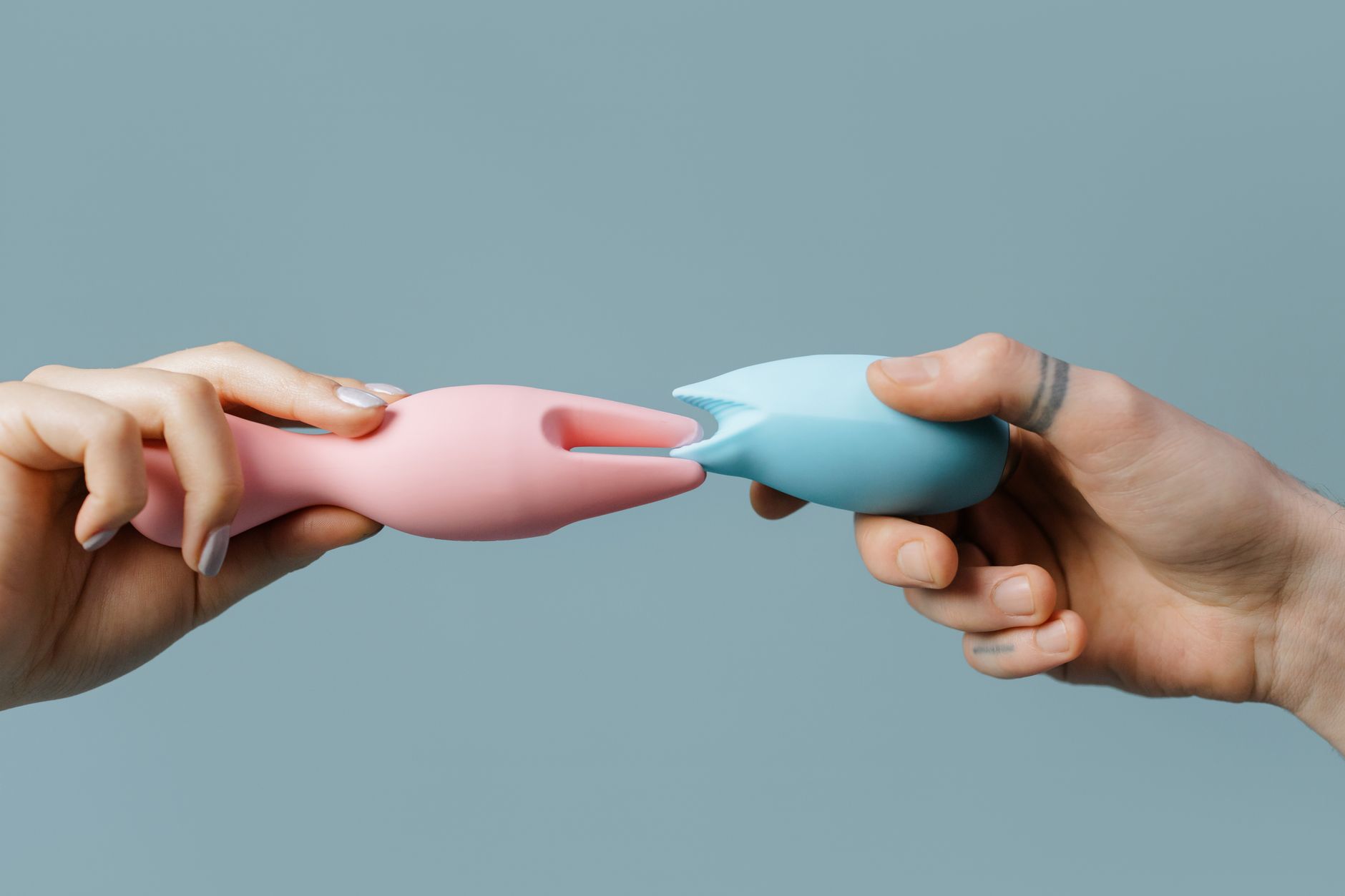
Let's start with what's actually happening
Your body is taking longer to warm up. That's not a malfunction. That's not broken wiring. That's just information about how you're operating right now, and it matters because most of us were taught that arousal happens on a switch. Either you're turned on or you're not. Either you want sex or you don't.
Here's the truth nobody explains: arousal exists on a spectrum that shifts with age, stress, hormones, medication, relationship dynamics, and pure circumstance. When your body takes longer to reach arousal, a lemon vibrator stops being a luxury and becomes a practical tool. It's not compensating for something broken. It's meeting your body where it actually is.
Why arousal gets slower (and why it matters)
There are about eight billion reasons arousal can slow down. Stress reduces blood flow to genital tissue. Certain medications dampen sensation. Hormonal shifts change how quickly the nervous system responds. Relationship fatigue, work exhaustion, grief, aging, and plain old overthinking all compress the arousal window. Some of these are temporary. Some aren't. Most matter less than you think if you stop expecting arousal to arrive on a schedule.
Here's what I see clinically: people with slower arousal either adapt and find new pathways to pleasure, or they keep expecting the old speed and get frustrated every time. The second option is exhausting for everyone involved.
A lemon vibrator is useful here because it bypasses the slow buildup. You don't need a 20-minute warm-up with a partner anymore. You don't need to wait for your body to catch up with your mind. You can meet yourself in the middle.
The real reason slower arousal isn't the problem you think it is
Slower arousal often means deeper arousal. When your body takes time to respond, it's usually moving more blood, more sensation, more nervous system engagement. It's not slower in the sense of less powerful. It's slower in the sense of more deliberate.
I work with people who spent decades expecting fast arousal, felt embarrassed when it stopped happening, and then discovered that once they stopped fighting the pace, their pleasure became more intense than it had been in years. Not because anything magical changed. Because they stopped waiting for their body to do something it wasn't doing, and started working with what it actually did.
A lemon vibrator fits into this perfectly because it doesn't require psychological arousal first. It creates physical sensation, which often generates psychological arousal once the wiring lights up. You're not fighting your body's pace anymore. You're using a tool that respects it.
The three shifts that actually work
First: separate arousal from penetration. Most of us were taught that arousal is preparation for something else. When arousal feels harder to reach, that framework collapses. Instead, treat arousal as its own valid state. Use a lemon vibrator on the clitoris for 10-15 minutes with zero expectation that this needs to lead anywhere. Often it will turn into something more. Sometimes it won't. Both are fine.
Second: stop calling it foreplay. Foreplay implies a main event coming. If arousal is already difficult to reach, framing external stimulation as "the opening act" to something else creates pressure. Call it what it is: pleasure. Clitoral stimulation with a lemon vibrator is the main event. There doesn't have to be a sequel.
Third: give yourself permission to use patterns you like, not patterns you think you should like. A lemon vibrator comes with multiple rhythm options. I watch people skip over their favorite pattern because they're embarrassed it feels "too strong" or "too fast." Your nervous system doesn't care what you're embarrassed about. It cares what actually works. Use the pattern that creates sensation. Your pleasure isn't something you should outgrow.
How to work with a lemon vibrator when your body is slow to warm up
Start earlier than you think you need to. If you're planning to have sex in an hour, start using your lemon vibrator 30-40 minutes before. Don't expect it to create arousal instantly. Think of it as beginning a conversation with your nervous system, not finishing one.
Use light patterns first. The Lem and other lemon clitoral vibrators have graduated intensity. Start at pattern 1 or 2. Most people with slower arousal respond better to consistent stimulation than they do to rapid escalation. You can always increase. You can't un-increase.
Keep lubrication nearby, even if you think you don't need it. Slower arousal sometimes means slower lubrication. Water-based lube isn't "cheating." It's the difference between pleasure and friction. Use it without guilt.
Set a timer, actually. Arousal that takes time is arousal that benefits from patience, but patience without structure becomes doubt. Give yourself 15-20 minutes of uninterrupted stimulation. That's long enough to move through the initial buildup into genuine sensation. Many people find that their body "wakes up" around the 10-minute mark.
Stop checking in on yourself. "Am I aroused yet?" creates a feedback loop of anticipation. Use your lemon vibrator, focus on sensation, not on whether you're doing it right. Arousal that's being monitored is arousal that gets slower, not faster.
When you're partnered and arousal feels like a performance
Honestly, this is where it gets complicated. If your partner expects you to be ready quickly, and your body doesn't cooperate, the pressure becomes real. A lemon vibrator actually helps here because it reframes what "getting ready" means. It's not something your partner does to you. It's something you do for yourself. You're using a tool, not waiting.
I recommend having a separate conversation from the sex conversation. "My arousal is taking longer right now, and here's what actually helps" is a logistics chat. "I'm worried you won't find me attractive if I take time to warm up" is a different chat entirely. Don't combine them. One is about technique. One is about reassurance. Your partner might not be able to provide both in the same moment.
Using a lemon vibrator solo before partnered sex can shift the dynamic entirely. You're not asking them to do something your body isn't ready for. You're bringing yourself to the table already partially engaged. That's different from making them wait while you catch up.
The unexpected part: sometimes the slow burn is better
I've worked with people who initially felt defective because their arousal got slower with age, or medication, or stress. Once they stopped fighting it and started working with it, they reported more intense orgasms and longer periods of pleasure. Not because the vibrator got better. Because they stopped treating their body's pace as something to fix.
A lemon vibrator doesn't speed you up. It helps you stop waiting for yourself. The distinction is huge.
FAQ: Slow arousal and lemon vibrators
How long should I use a lemon vibrator before I'm "ready"?
There's no fixed timeline. But give yourself at least 10-15 minutes of continuous use. Most people find this is long enough to move from initial sensation into genuine arousal. If you're checking the clock, you're probably not ready to transition to something else yet. Arousal isn't a box to check. It's a state to settle into.
Is it normal for arousal to take longer as you get older?
Completely normal. Slower arousal is one of the most common shifts with age and hormonal change. It doesn't mean your capacity for pleasure is declining. It usually means your nervous system is responding differently, often requiring more consistent or sustained stimulation. A lemon vibrator provides that consistency.
Can a lemon vibrator help if medication is affecting my arousal?
Yes, though talk to your doctor first. Many medications dampen sensation or slow arousal. A vibrator with suction or air-pulse technology (like clitoral vibrators from Get Lemon Toys) can create stimulation that bypasses some of those effects. If the medication is the root cause, your doctor might adjust dosing or timing. The vibrator helps while you sort that out.
What pattern should I use if arousal feels stuck?
Start low and consistent. Most people with difficult arousal respond better to steady rhythm than to fast oscillation. Use pattern 1 or 2 on a lemon vibrator for 5-10 minutes, then you can experiment with variations. If one pattern helps you build sensation, stick with it. You don't need to prove you like the "stronger" patterns.
Should I use a lemon vibrator alone or with a partner when arousal is slow?
Both work. Alone, there's zero pressure and zero performance. With a partner, it reframes your role from "person who needs to get ready" to "person who's managing their own pleasure." Many people find that this shift reduces anxiety, which actually helps arousal move faster. There's no wrong choice. Do what feels less stressful.
How do I explain to a partner that I need more time to warm up?
Keep it practical, not apologetic. "My arousal takes longer right now, and here's what helps" works better than "I'm sorry I'm slow." If they care about your pleasure, this is useful information. If they respond with frustration, that's a different conversation, and it's not about the vibrator.
Here's what actually matters
Slower arousal isn't a countdown to failure. It's information about how your body is operating in this moment. A lemon clitoral vibrator works here because it's a tool that doesn't care about your pace. It creates sensation consistently, gives you permission to take time, and often helps your nervous system move from stuck to engaged.
Your pleasure matters more than the speed. Once you believe that, everything else gets easier.
If you want to explore how a lemon vibrator might work for your body, we're here to help. Reach out with any questions about which device might work best for you.